research
How a Novel Molecular Glue Reactivates KEAP1 to Suppress NRF2-Driven Tumors
NRF2 Editorial Team May 4, 2026
Quick Answer
Discover how VVD-065, a groundbreaking molecular glue, restores KEAP1 function to regulate NRF2 and offers new hope in targeting NRF2-driven cancers. Learn about this innovative drug development breakthrough.
# Unlocking New Therapeutic Potential: How VVD-065 Reactivates KEAP1 to Control NRF2 in Cancer
The NRF2 pathway plays a vital role in cellular defense against oxidative stress, regulating genes that protect cells from damage. However, when NRF2 signaling goes awry—often due to mutations or dysregulation of its negative regulator KEAP1—it can fuel tumor growth and resistance to therapy. This makes the NRF2-KEAP1 axis a compelling target for drug development, but until recently, directly modulating this pathway has proven challenging.
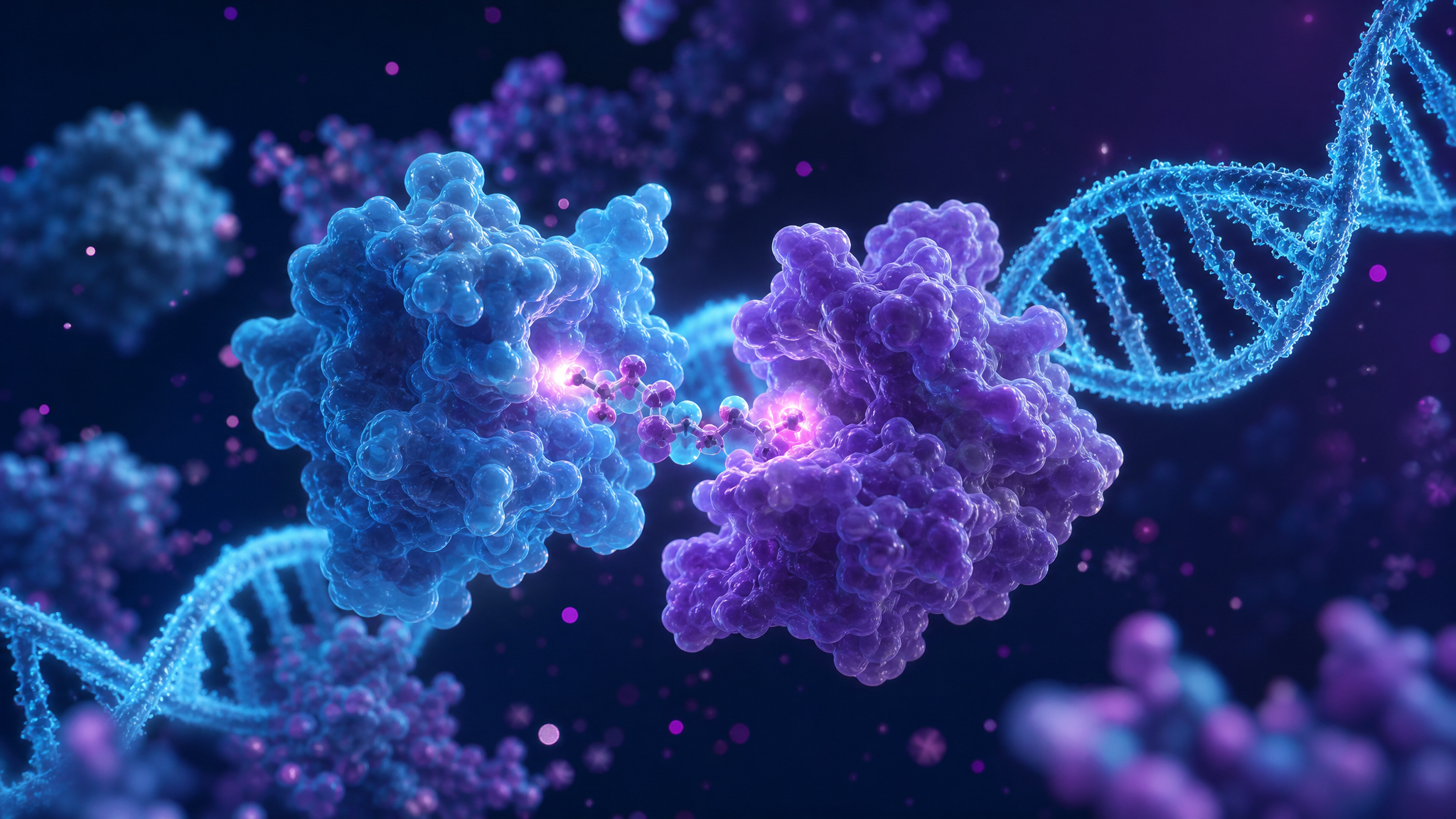
A recent breakthrough study by Roy and colleagues introduces a novel class of compounds called **double allosteric molecular glues**, exemplified by the molecule VVD-065, which can restore KEAP1’s ability to control NRF2. This innovative approach offers fresh hope for selectively suppressing NRF2-driven tumors by reactivating the cell’s natural protein degradation machinery.
## The NRF2-KEAP1 Pathway: A Double-Edged Sword
NRF2 (Nuclear factor erythroid 2–related factor 2) is a transcription factor that orchestrates the expression of antioxidant and detoxification genes, protecting cells from oxidative damage and environmental toxins. Under normal conditions, KEAP1 (Kelch-like ECH-associated protein 1) binds NRF2 and facilitates its ubiquitination and subsequent degradation via the CUL3 E3 ubiquitin ligase complex. This keeps NRF2 levels low in the absence of stress.
However, in many cancers, mutations or alterations in KEAP1 disrupt this regulation, leading to persistent NRF2 activation. Elevated NRF2 promotes tumor survival, proliferation, and resistance to chemotherapy and radiation by enhancing antioxidant defenses and metabolic rewiring. Consequently, tumors with hyperactive NRF2 are often aggressive and difficult to treat.
## Challenges in Targeting NRF2-Driven Cancers
Directly inhibiting NRF2 has been difficult due to its role as a transcription factor and the lack of suitable binding pockets for small molecules. Alternatively, restoring KEAP1’s function to degrade NRF2 is an attractive strategy but requires precise modulation of protein-protein interactions within the ubiquitin-proteasome system.
This is where molecular glues come into play. Molecular glues are small molecules that promote or stabilize interactions between two proteins, often leading to targeted protein degradation. While molecular glues have shown promise in other contexts, their application to the KEAP1-NRF2 axis has remained unexplored—until now.
## VVD-065: A Double Allosteric Molecular Glue
Roy et al. describe VVD-065, a **covalent allosteric molecular glue** that binds specifically to the cysteine residue Cys151 on KEAP1. This binding enhances the assembly of the KEAP1-CUL3 E3 ligase complex, effectively restoring KEAP1’s ability to ubiquitinate NRF2 and target it for degradation.
Unlike traditional inhibitors, VVD-065 does not block NRF2 directly. Instead, it reactivates the endogenous degradation machinery by stabilizing KEAP1’s interaction with CUL3, a process the authors term **double allostery**. This means VVD-065 modulates two allosteric sites simultaneously to promote functional protein complex formation.
## Mechanism of Action: Restoring Cellular Balance
1. **Covalent Binding to KEAP1:** VVD-065 forms a covalent bond with Cys151, a critical sensor residue on KEAP1 that detects oxidative stress.
2. **Enhanced KEAP1-CUL3 Assembly:** This binding induces conformational changes that strengthen the interaction between KEAP1 and the CUL3 ubiquitin ligase.
3. **Reactivation of NRF2 Ubiquitination:** With the KEAP1-CUL3 complex stabilized, NRF2 is ubiquitinated more efficiently, marking it for degradation by the proteasome.
4. **Selective Suppression of NRF2-Driven Tumors:** By lowering NRF2 levels, VVD-065 suppresses tumor growth driven by aberrant NRF2 activity without broadly inhibiting NRF2’s protective functions in normal cells.
## Implications for Drug Development and Cancer Therapy
The discovery of VVD-065 as a double allosteric molecular glue opens exciting avenues for therapeutic intervention in NRF2-driven cancers, which have historically been difficult to target. Key implications include:
- **Selective Targeting:** VVD-065’s mechanism allows selective suppression of tumors with dysregulated NRF2, potentially limiting off-target effects.
- **Novel Drug Modality:** This study expands the molecular glue concept to covalent allosteric modulation, offering a new toolkit for drug developers.
- **Overcoming Resistance:** By restoring the natural degradation pathway of NRF2, VVD-065 may help overcome resistance mechanisms that make tumors refractory to conventional therapies.
- **Broader Applications:** The double allostery strategy could be adapted to other protein complexes involved in disease, broadening the impact beyond NRF2 and cancer.
## What’s Next?
While VVD-065 shows promise in preclinical models, further research is needed to evaluate its safety, efficacy, and pharmacokinetics in humans. Clinical trials will be essential to determine whether this innovative molecular glue can translate into effective therapies for patients with NRF2-driven malignancies.
Moreover, understanding the full spectrum of KEAP1 mutations and NRF2 activation states in different cancers will help tailor treatments and identify patients most likely to benefit.
## Conclusion
The work by Roy and colleagues marks a significant milestone in NRF2 research and drug development. By harnessing the power of double allosteric molecular glues like VVD-065, scientists are now closer to reining in NRF2’s tumor-promoting activity through reactivation of KEAP1’s natural control mechanisms.
This breakthrough not only offers hope for patients battling NRF2-driven cancers but also showcases the potential of innovative molecular strategies to tackle challenging targets in disease.
Stay tuned to NRF2 Hub for the latest updates on this exciting frontier in NRF2 biology and therapeutic innovation.
---
*References:*
- Roy et al., "A New Class of Molecular Glues: Double Allostery Restores KEAP1 Control of NRF2," *Cell*, p. 953.
---
*Explore more about NRF2, KEAP1, and molecular glues at NRF2 Hub.*
Health & FDA Disclaimer
The statements on this website have not been evaluated by the Food and Drug Administration (FDA). The content provided is for informational and educational purposes only and is not intended to diagnose, treat, cure, or prevent any disease. This article does not constitute medical advice. Always consult your physician or a qualified healthcare provider before starting any new supplement, diet, or wellness program. Read our full medical disclaimer →