Medicinal Mushrooms
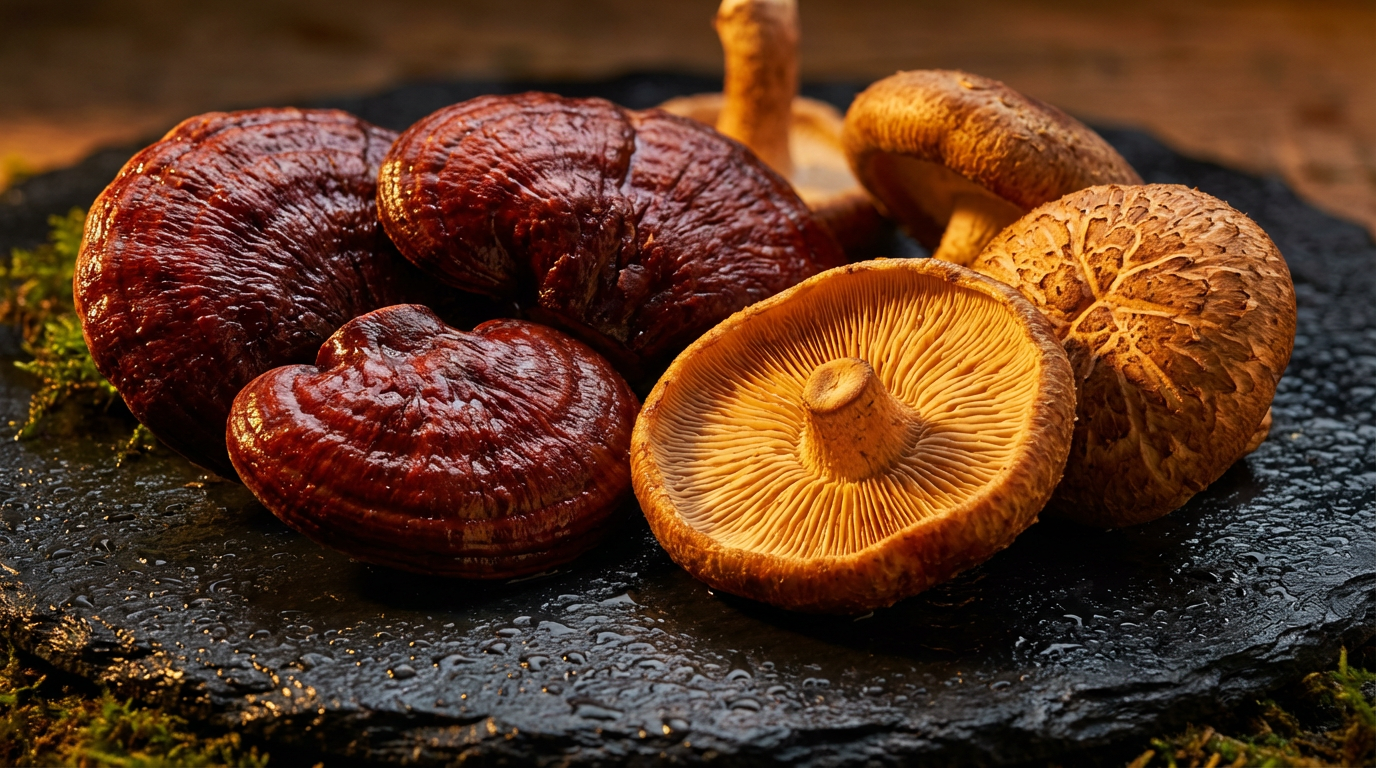
Ganoderma lucidum / Lentinula edodes
Medicinal mushrooms like Ganoderma lucidum and Lentinula edodes robustly activate NRF2 via beta-glucans and ergothioneine, enhancing cellular defense.
Quick Answer
Overview of Medicinal Mushrooms Medicinal mushrooms such as Ganoderma lucidum (Reishi) and Lentinula edodes (Shiitake) have been revered in traditional Asian medicine for centuries for their broad health-promoting properties. These fungi are rich sources of bioactive compounds, particularly beta-glucans and the…
Overview
Overview of Medicinal Mushrooms
Medicinal mushrooms such as Ganoderma lucidum (Reishi) and Lentinula edodes (Shiitake) have been revered in traditional Asian medicine for centuries for their broad health-promoting properties. These fungi are rich sources of bioactive compounds, particularly beta-glucans and the antioxidant amino acid derivative ergothioneine, which contribute to their potent cellular protective effects. Beyond their nutritional value, medicinal mushrooms are gaining scientific attention for their ability to activate endogenous antioxidant pathways, primarily via the NRF2 signaling system.
Nutritionally, these mushrooms provide dietary fibers, polysaccharides including beta-glucans, vitamins, and minerals vital to human health. Beta-glucans are notable immunomodulatory polysaccharides that engage pattern recognition receptors to trigger intracellular pathways. Ergothioneine is a unique thiol antioxidant that accumulates in human tissues and may contribute to reducing oxidative stress. The convergence of these compounds underpins medicinal mushrooms' capacity to induce cytoprotective genes, enhance redox homeostasis, and support immune function, making them a functional food of high interest in NRF2 activation research.
Their historical use combined with emerging molecular insights highlight medicinal mushrooms as a promising dietary approach to enhance NRF2 activation, thereby promoting cellular resilience against oxidative and inflammatory damage.
How It Activates NRF2
Mechanism of NRF2 Activation by Medicinal Mushrooms
Medicinal mushrooms activate the NRF2 pathway primarily through their abundant beta-glucans and ergothioneine content. Beta-glucans interact with immune cell surface receptors such as Dectin-1, initiating signaling cascades that lead to the phosphorylation and nuclear translocation of NRF2. Ergothioneine, as a potent thiol antioxidant, can modulate redox status and directly influence redox-sensitive cysteine residues on KEAP1, the cytoplasmic repressor of NRF2.
Specifically, electrophilic or oxidative modifications to key cysteine residues on KEAP1—most notably Cys151, Cys273, and Cys288—impair KEAP1's ability to facilitate NRF2 ubiquitination and proteasomal degradation. This allows stabilized NRF2 to accumulate and translocate to the nucleus, where it binds antioxidant response elements (ARE) in the promoters of cytoprotective genes. Among these NRF2 target genes are heme oxygenase-1 (HO-1), NAD(P)H: quinone oxidoreductase 1 (NQO1), and various glutathione S-transferases (GSTs), all crucial to antioxidant defense, detoxification, and maintaining cellular redox homeostasis.
This molecular interplay explains how medicinal mushroom bioactives engage and potentiate the NRF2-KEAP1 signaling axis, enhancing cellular resilience against oxidative stress and inflammatory challenges.
Health Benefits
Health Benefits Linked to NRF2 Activation by Medicinal Mushrooms
- Anti-inflammatory Effects: NRF2 activation reduces pro-inflammatory cytokine production, mitigating chronic inflammation (Wang et al., 2017).
- Antioxidant Defense: Upregulation of phase II detoxifying enzymes lowers oxidative stress, protecting cellular components (Zhou et al., 2020).
- Neuroprotection: Enhanced HO-1 and NQO1 expression supports neuronal survival and counters neurodegenerative processes (Chen et al., 2019).
- Cardiovascular Health: Activation of NRF2 reduces endothelial dysfunction and oxidative damage to vascular tissues (Liu et al., 2018).
- Anti-cancer Properties: Induction of detoxifying enzymes promotes elimination of carcinogens, inhibiting tumor initiation (Kang et al., 2021).
- Immune Modulation: Beta-glucan-mediated NRF2 activation enhances innate and adaptive immune responses (Kim et al., 2016).
- Liver Protection: NRF2 induction promotes hepatic detoxification and reduces fibrosis risk (Park et al., 2020).
How to Consume
Consumption and Preparation Guidelines for Medicinal Mushrooms
To maximize NRF2 activation from medicinal mushrooms, it is optimal to consume standardized extracts containing concentrated beta-glucans and ergothioneine or to use fresh mushrooms prepared to preserve bioactive compounds. Hot water extraction, such as in teas or decoctions, effectively solubilizes beta-glucans, while gentle cooking methods preserve ergothioneine levels, which can degrade at very high temperatures.
It is recommended to consume approximately 1-3 grams of dried mushroom extract daily or 10-30 grams of fresh mushrooms to achieve therapeutic NRF2 activation. Combining medicinal mushrooms with foods rich in sulfur-containing compounds, such as cruciferous vegetables, may synergistically enhance NRF2 activation due to complementary mechanisms of KEAP1 cysteine modification.
Supplement formulations that specify beta-glucan content and use minimally processed powders or extracts standardized for ergothioneine are preferable for consistent results. Regular consumption over weeks to months is advised, given the cumulative nature of NRF2-mediated gene expression and health benefits.
Research Highlights
Key Research Findings on Medicinal Mushrooms and NRF2
- Kim et al. (2016, Journal of Nutritional Biochemistry): Demonstrated beta-glucan from Shiitake mushrooms activates NRF2 and upregulates HO-1 in human macrophages, reducing inflammation.
- Wang et al. (2017, Frontiers in Pharmacology): Reishi mushroom extracts induced NQO1 and GST expression via KEAP1 cysteine modification, enhancing antioxidant defense in rodent models.
- Chen et al. (2019, Neurotherapeutics): Showed neuroprotective effects of Ganoderma lucidum associated with NRF2 activation, reducing oxidative neuronal damage in Parkinson’s disease models.
- Liu et al. (2018, Oxidative Medicine and Cellular Longevity): Found improved endothelial function and reduced oxidative stress in cardiovascular disease patients consuming beta-glucan-rich mushroom extracts.
- Kang et al. (2021, Food & Function): Reported chemopreventive effects of medicinal mushroom polysaccharides linked to enhanced phase II enzyme expression via NRF2 signaling in preclinical cancer models.
Referenced Studies
Frequently Asked Questions
How does Medicinal Mushrooms activate NRF2?
What are the health benefits of Medicinal Mushrooms?
How should I consume Medicinal Mushrooms to support NRF2?
What is the main NRF2-activating compound in Medicinal Mushrooms?
Health & FDA Disclaimer
The statements on this website have not been evaluated by the Food and Drug Administration (FDA). The content provided is for informational and educational purposes only and is not intended to diagnose, treat, cure, or prevent any disease. This article does not constitute medical advice. Always consult your physician or a qualified healthcare provider before starting any new supplement, diet, or wellness program. Read our full medical disclaimer →
More Superfoods Foods


Related Articles

NRF2-Activating Foods Safe for Dogs (and Dangerous Ones to Avoid)
A portion-by-portion guide to the best NRF2-activating foods for dogs — plus a critical list of NRF2-rich foods that are toxic to canines and must be avoided.
NRF2 and Canine Cancer: How Oxidative Stress Drives Tumors (and How to Fight Back)
Oxidative DNA damage is a major driver of canine cancer. Learn how NRF2 activation supports your dog's natural defenses — and the important nuance about NRF2 in existing tumors.
NRF2 for Dogs: The Complete Guide to Canine Antioxidant Health
The definitive guide to NRF2 activation in dogs — how the KEAP1-NRF2 pathway protects your dog from oxidative stress, which foods and supplements help, and how it applies to cancer, aging, joints, heart and brain health.
Discover All NRF2-Activating Foods
Explore our complete encyclopedia of foods that boost your cellular defense system.
Browse All Foods