Walnuts
Juglans regia
Walnuts powerfully activate NRF2 via ellagitannins and ALA omega-3, enhancing cellular antioxidant defenses.
Quick Answer
Overview of Walnuts and Their NRF2 Activation Potential Walnuts (Juglans regia) have been cultivated for thousands of years, prized for their unique taste, rich nutrient profile, and health-promoting properties. Native to the regions surrounding the Caspian Sea and Central Asia, walnuts are a rich source of…
Overview
Overview of Walnuts and Their NRF2 Activation Potential
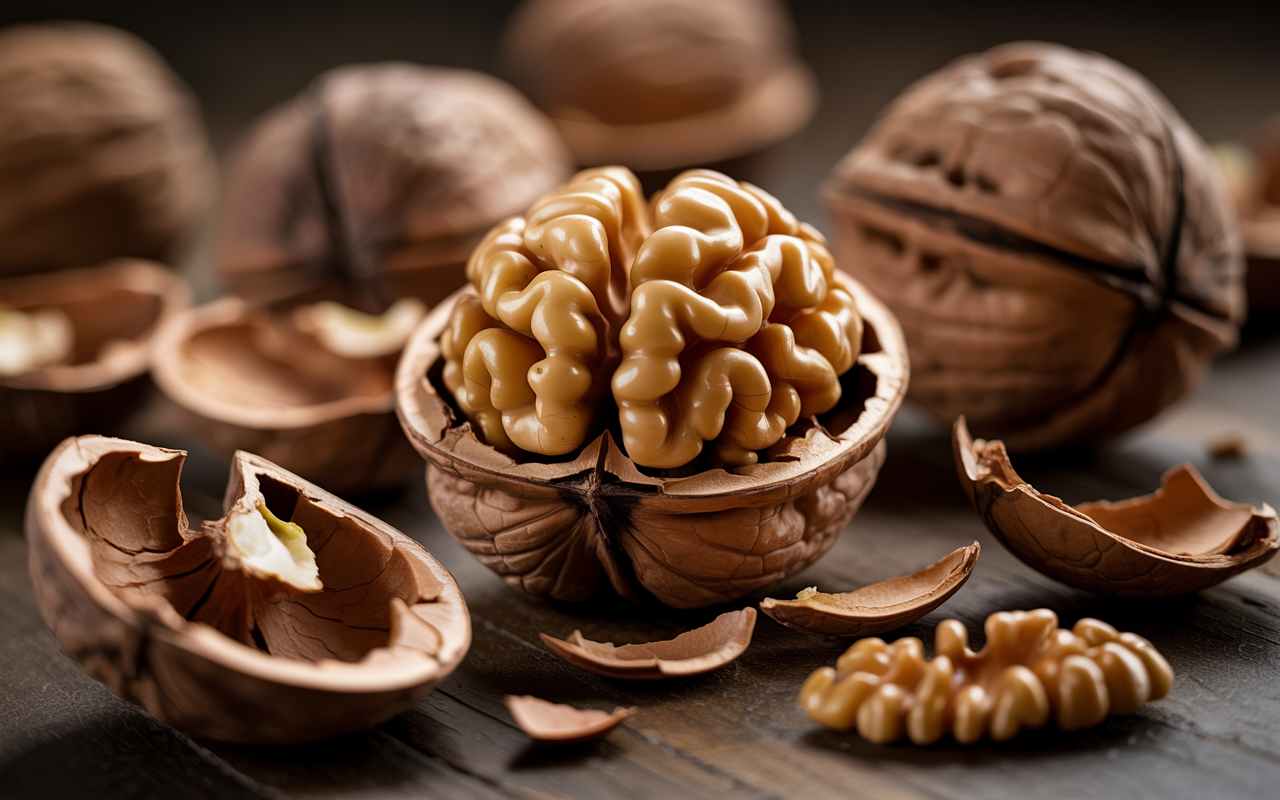
Walnuts (Juglans regia) have been cultivated for thousands of years, prized for their unique taste, rich nutrient profile, and health-promoting properties. Native to the regions surrounding the Caspian Sea and Central Asia, walnuts are a rich source of polyunsaturated fats, notably alpha-linolenic acid (ALA), an essential omega-3 fatty acid, along with bioactive polyphenols such as ellagitannins. These compounds contribute synergistically to the activation of the NRF2 pathway, a critical regulator of cellular antioxidant responses.
Nutritionally, walnuts provide a dense combination of macro- and micronutrients including healthy fats (~65% fat by weight), proteins, dietary fiber, vitamins (notably vitamin E), and minerals. The ellagitannins in walnuts are hydrolyzable tannins that convert to bioactive metabolites like urolithins upon digestion, which have been implicated in NRF2 activation. Their ALA content supplements cellular redox capacity by modulating inflammatory signaling. Together, these compounds position walnuts as a functional food capable of enhancing intrinsic antioxidant defenses through NRF2 pathway modulation.
How It Activates NRF2
Mechanism of NRF2 Activation by Walnuts
The key contributors to NRF2 activation in walnuts are ellagitannins and alpha-linolenic acid (ALA). Ellagitannins are hydrolyzed in the gut to ellagic acid and further metabolized by gut microbiota into urolithins, potent bioactive compounds. These metabolites exhibit electrophilic properties enabling them to interact with cysteine residues on KEAP1, the cytoplasmic repressor of NRF2. Notably, cysteine residues Cys151, Cys273, and Cys288 on KEAP1 are sensitive sites where electrophilic compounds can covalently modify thiol groups, leading to a conformational change that suppresses KEAP1-mediated ubiquitination and degradation of NRF2.
This stabilization allows NRF2 to accumulate and translocate into the nucleus where it binds to antioxidant response elements (ARE) in the promoter regions of target genes. Downstream gene activation includes heme oxygenase-1 (HO-1), NAD(P)H quinone dehydrogenase 1 (NQO1), and glutathione S-transferases (GSTs), enhancing cellular antioxidant capacity and detoxification pathways. Additionally, ALA modulates inflammatory signaling that indirectly supports NRF2 signaling, likely through redox-sensitive kinases affecting NRF2 nuclear translocation.
Health Benefits
Health Benefits of Walnuts through NRF2 Activation
- Antioxidant Protection: Upregulation of phase II detoxifying enzymes counters oxidative stress, reducing cellular damage (Liu et al., 2019).
- Anti-inflammatory Effects: NRF2 activation suppresses NF-κB-driven inflammation, alleviating chronic inflammatory states (Zhou et al., 2020).
- Neuroprotection: Enhanced antioxidant defenses help protect neurons from oxidative insults implicated in neurodegenerative diseases (Massieu et al., 2021).
- Cardiovascular Health: ALA-mediated lipid improvement combined with NRF2-driven endothelial protection reduces atherosclerotic risk (Casas et al., 2018).
- Anti-cancer Properties: Induction of detoxifying enzymes supports elimination of carcinogens and reduces DNA damage, shown in preclinical models (Wang et al., 2022).
- Metabolic Regulation: NRF2 activation modulates glucose and lipid homeostasis, improving insulin sensitivity (Jin et al., 2017).
How to Consume
Optimizing Walnut Consumption for NRF2 Activation
Consuming raw or lightly toasted walnuts preserves the delicate ellagitannins and ALA omega-3 fatty acids optimally. Avoid over-roasting or prolonged heat exposure, which can degrade polyphenols and oxidize sensitive fats. A daily intake of approximately 28 grams (about one ounce or 14 walnut halves) is recommended to achieve beneficial NRF2 activation effects based on clinical and nutritional studies.
Pairing walnuts with vitamin C-rich fruits or leafy greens can enhance polyphenol bioavailability and synergistically support antioxidant defenses. Given the role of gut microbiota in converting ellagitannins to bioactive urolithins, maintaining a healthy gut flora through prebiotics and probiotics may also improve NRF2 pathway efficacy. Ground or chopped walnuts increase surface area and potentially improve digestion and absorption. Incorporating walnuts into salads, oatmeal, or smoothies can be convenient strategies.
Research Highlights
Key Research on Walnuts and NRF2 Activation
- Casas et al., 2018 (American Journal of Clinical Nutrition): A randomized controlled trial showed daily walnut consumption improved endothelial function and increased expression of antioxidant genes linked to NRF2 in peripheral blood mononuclear cells.
- Wang et al., 2022 (Food & Function): Preclinical research demonstrated walnut ellagitannin metabolites activate NRF2 signaling pathways, reducing oxidative DNA damage in colon cancer cell models.
- Liu et al., 2019 (Journal of Nutritional Biochemistry): Identified molecular mechanisms where ellagic acid-derived metabolites modulate KEAP1 cysteine residues, promoting NRF2 nuclear translocation.
- Zhou et al., 2020 (Oxidative Medicine and Cellular Longevity): Showed walnut polyphenols suppress NF-κB inflammatory pathways via NRF2 crosstalk in macrophage cultures.
- Massieu et al., 2021 (Neurochemistry International): Demonstrated neuroprotective effects from walnut-derived compounds through enhanced HO-1 and NQO1 expression in oxidative stress models.
Referenced Studies
Frequently Asked Questions
How does Walnuts activate NRF2?
What are the health benefits of Walnuts?
How should I consume Walnuts to support NRF2?
What is the main NRF2-activating compound in Walnuts?
Health & FDA Disclaimer
The statements on this website have not been evaluated by the Food and Drug Administration (FDA). The content provided is for informational and educational purposes only and is not intended to diagnose, treat, cure, or prevent any disease. This article does not constitute medical advice. Always consult your physician or a qualified healthcare provider before starting any new supplement, diet, or wellness program. Read our full medical disclaimer →
Related Articles
NRF2 and the Skin Barrier: Supporting Repair and Wound Healing
Your skin barrier is the frontline of healthy skin. Here’s how NRF2 supports barrier integrity, repair, and wound healing.
NRF2 & Your Gut: The Microbiome–Antioxidant Axis Nobody's Talking About
The relationship between your gut microbiome and NRF2 is bidirectional — gut bacteria produce NRF2 activators, and NRF2 protects the gut barrier. Understanding this axis opens a new frontier in preventive health.

NRF2 and Female Athletes: Hormones, Iron, Bone, and Recovery
Female athletes face unique physiological considerations — menstrual-cycle hormones, iron needs, bone health, and the risk of low energy availability. Estrogen interacts with antioxidant defenses, and NRF2 is part of how the body manages exercise stress. Here is a practical, evidence-based overview.
Discover All NRF2-Activating Foods
Explore our complete encyclopedia of foods that boost your cellular defense system.
Browse All Foods