Introduction: Why This Matters
Parkinson’s disease (PD) is a progressive neurodegenerative disorder characterized by the loss of dopaminergic neurons, leading to motor dysfunction and diminished quality of life. A growing body of research highlights the role of oxidative stress and ferroptosis—a form of iron-dependent cell death—in driving neuronal damage in PD.
The transcription factor NRF2 (nuclear factor erythroid 2-related factor 2) is a master regulator of cellular antioxidant defense, orchestrating the expression of genes that protect against oxidative damage. Activating the NRF2 pathway offers a promising therapeutic strategy to slow or prevent neurodegeneration.
Traditional herbal medicine provides a rich source of bioactive compounds with antioxidant properties. Astragalus membranaceus, a revered herb in Chinese medicine, has long been used to treat symptoms resembling PD. However, delivering its active components effectively to the brain has been a challenge—until now.
Study Overview: What Researchers Did
A recent study published in the Journal of Ethnopharmacology by Huang et al. explored an innovative approach to overcome the blood-brain barrier (BBB) and deliver the antioxidant compound calycosin (CA) directly to affected neurons.
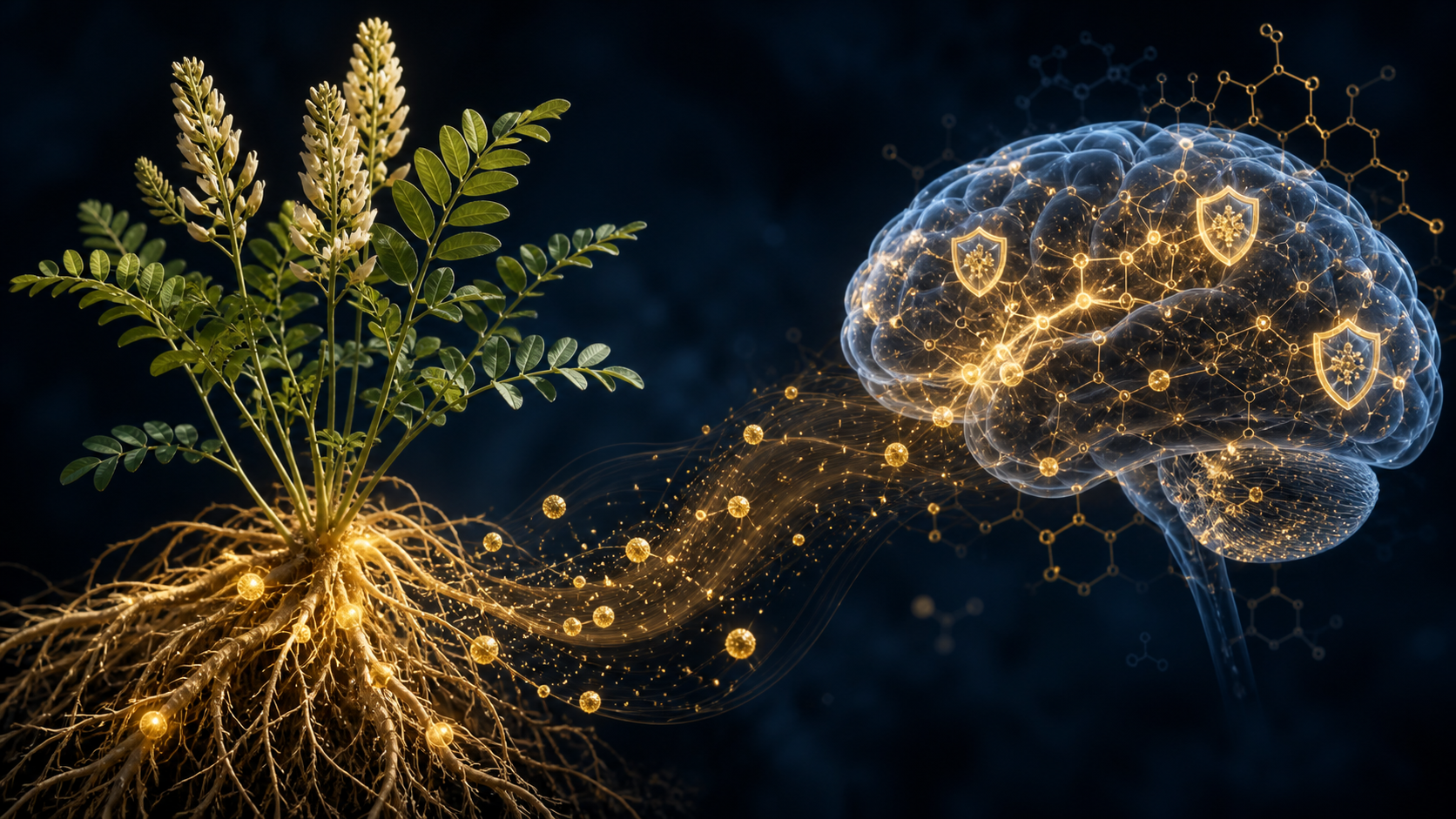
The researchers isolated exosomes—tiny natural vesicles—from Astragalus membranaceus. These exosomes act as nanocarriers, capable of crossing the BBB. They then loaded these exosomes with calycosin, creating AS-Exos-CA.
Key Methods Used
- Isolation and characterization of Astragalus-derived exosomes using ultracentrifugation, nanoparticle tracking analysis (NTA), and transmission electron microscopy (TEM).
- Loading calycosin into exosomes and measuring encapsulation efficiency via high-performance liquid chromatography (HPLC).
- Testing BBB penetration and cellular uptake in PC12 neuronal cells and MPTP-induced PD mouse models using fluorescence labeling.
- Evaluating motor function, dopaminergic neuron survival, oxidative stress markers, iron metabolism, and mitochondrial health in treated mice.
- Using an NRF2-specific inhibitor (ML385) in vitro to confirm the involvement of the NRF2 pathway in the neuroprotective effects.
Key Findings: The Results
- Efficient Delivery Across the BBB: AS-Exos-CA successfully crossed the blood-brain barrier and accumulated in the brain 12 hours after intravenous injection.
- Neuroprotection in PD Models: Treatment with AS-Exos-CA significantly improved motor deficits and rescued dopaminergic neurons compared to free calycosin or exosomes alone.
- Reduction of Oxidative Stress and Ferroptosis: AS-Exos-CA lowered reactive oxygen species (ROS) and malondialdehyde (MDA) levels, restored glutathione (GSH), and mitigated iron accumulation and mitochondrial damage.
- Activation of the NRF2/SLC7A11/GPX4 Axis: The exosome-delivered calycosin promoted NRF2 nuclear translocation and upregulated downstream antioxidant genes, including SLC7A11 and GPX4, key regulators of ferroptosis.
- NRF2 Dependency Confirmed: Inhibition of NRF2 with ML385 abolished the protective effects of AS-Exos-CA in neuronal cells, confirming the central role of NRF2 in mediating antioxidant defense.
What This Means for You: Practical Takeaways
This groundbreaking study bridges traditional herbal medicine with cutting-edge nanotechnology to tackle Parkinson’s disease at the cellular level.
- Novel Therapeutic Strategy: Utilizing herbal-derived exosomes to deliver bioactive antioxidants like calycosin offers a promising new avenue for PD treatment.
- Targeting Oxidative Stress: By activating the NRF2 pathway, this approach enhances the brain’s natural cellular defense mechanisms against oxidative damage and ferroptosis.
- Improved Drug Delivery: Overcoming the blood-brain barrier is a major hurdle in neurodegenerative disease therapy; exosome-based delivery may revolutionize how we treat brain disorders.
- Potential for Broader Applications: The NRF2/SLC7A11/GPX4 axis is implicated in many diseases involving oxidative stress, suggesting this strategy could extend beyond PD.
While this research is still in preclinical stages, it highlights the exciting potential of combining natural compounds with advanced delivery systems to protect neuronal health.
Conclusion
The study by Huang and colleagues provides compelling evidence that Astragalus membranaceus-derived exosomes loaded with calycosin can effectively cross the blood-brain barrier and activate the NRF2 antioxidant pathway to combat ferroptosis in Parkinson’s disease models.
This innovative approach not only rescues dopaminergic neurons but also restores mitochondrial function and reduces oxidative stress, addressing key pathological features of PD. By harnessing the power of NRF2-mediated cellular defense, AS-Exos-CA represents a promising therapeutic candidate for slowing neurodegeneration.
As research advances, this fusion of ethnopharmacology and nanomedicine could pave the way for novel, more effective treatments for Parkinson’s and other oxidative stress-related neurological disorders.
References
Huang H, Xu X, Huo X, Bo Y, Fan H. Astragalus membranaceus-derived exosomes deliver calycosin to orchestrate the Nrf2/SLC7A11/GPX4 axis against ferroptosis in Parkinson's disease. J Ethnopharmacol. 2024; PMID: 42998702.