Introduction: Why This Matters
Atherosclerosis, a leading cause of cardiovascular disease, is driven by lipid imbalances and oxidative stress damaging blood vessels. Understanding how to enhance the body's cellular defense mechanisms against oxidative damage is critical for prevention and treatment.
NRF2 (nuclear factor erythroid 2-related factor 2) plays a central role as a master regulator of antioxidant responses, protecting cells from oxidative stress. Recent research explores innovative ways to activate NRF2 and related pathways to improve vascular health.
Study Overview: What Researchers Did
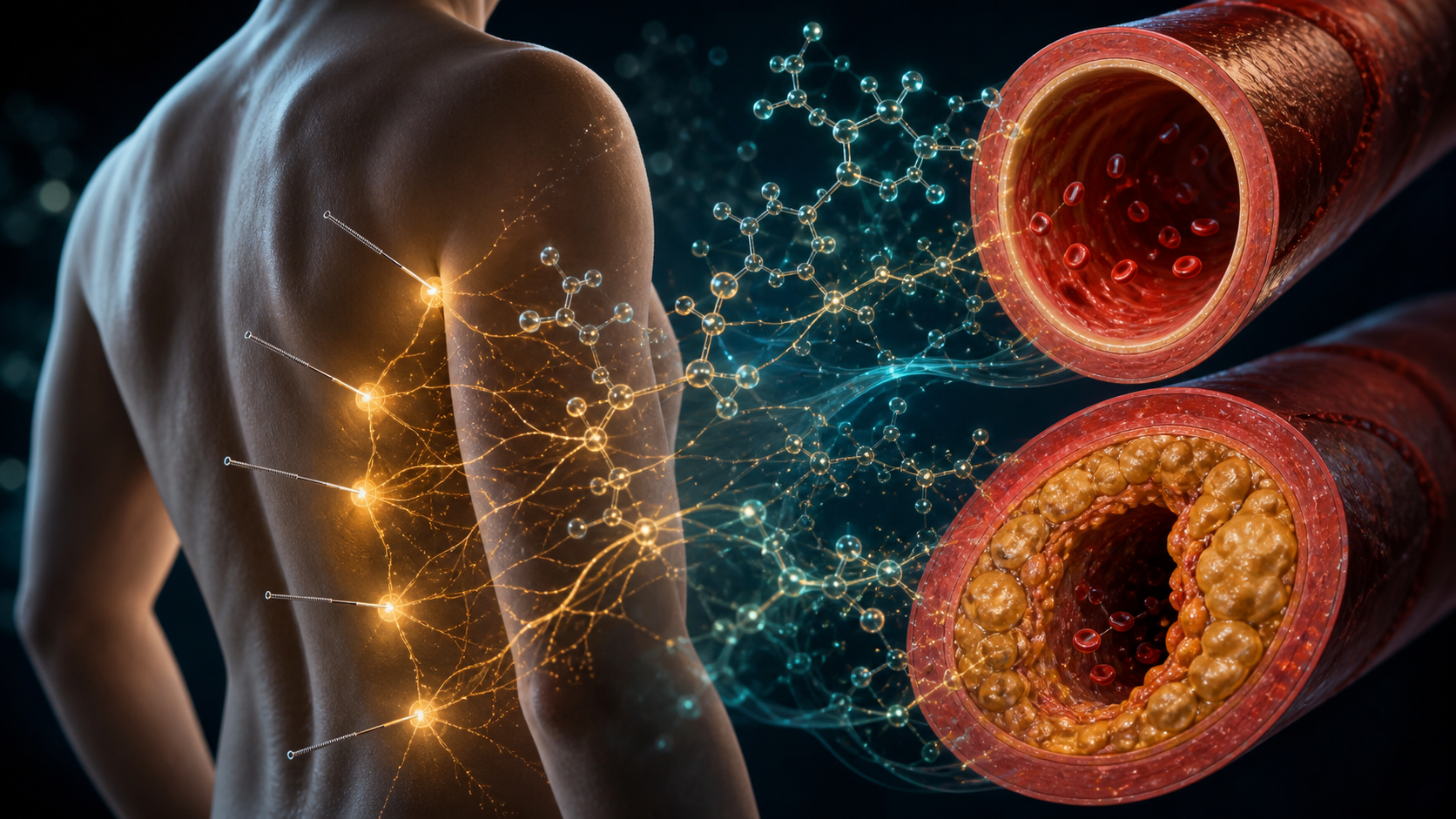
A recent study published in Acupuncture Research investigated the effects of electroacupuncture (EA) on the thoracic aorta of ApoE-/- mice, a well-established model for atherosclerosis.
The research team led by Luo Ya et al. focused on how EA influences the SIRT1/HIF-1α/NRF2 signaling pathway, which is crucial for regulating oxidative stress and lipid metabolism.
Experimental Design
- 42 male ApoE-/- mice fed a high-fat diet for 12 weeks to induce atherosclerosis; 10 normal mice served as controls.
- Mice were divided into four groups: model (no treatment), EA treatment, EA + SIRT1 inhibitor (EX-527), and SIRT1 agonist (resveratrol).
- EA was applied at acupoints Neiguan (PC6), Tongli (HT5), and Zusanli (ST36) using a sparse-dense wave (2 Hz/15 Hz) for 20 minutes every other day over 8 weeks.
- Serum lipid profiles, oxidative stress markers, and histopathological changes in the aorta were assessed.
- Protein and mRNA levels of SIRT1, HIF-1α, and NRF2 were measured using Western blot and RT-qPCR.
Key Findings: The Results
- Improved lipid metabolism: EA treatment increased HDL-C ("good cholesterol") and decreased LDL-C, total cholesterol, and triglycerides in ApoE-/- mice.
- Enhanced antioxidant status: EA elevated antioxidant enzymes such as superoxide dismutase (SOD) and glutathione peroxidase (GSH-Px), while reducing malondialdehyde (MDA), a marker of oxidative damage.
- Pathological improvements: Histology showed reduced aortic plaque formation, less endothelial cell proliferation, and decreased inflammatory infiltration after EA.
- Modulation of signaling pathways: EA upregulated SIRT1 and NRF2 expression and downregulated HIF-1α, suggesting activation of the antioxidant defense system.
- SIRT1’s critical role: Blocking SIRT1 with EX-527 reversed EA’s benefits, while activating SIRT1 with resveratrol mimicked EA’s effects, confirming SIRT1 as a key mediator.
What This Means for You: Practical Takeaways
This study highlights the promising role of electroacupuncture as a complementary approach to managing atherosclerosis by harnessing the body's natural antioxidant defenses.
- NRF2 activation: Enhancing NRF2 through SIRT1 modulation can reduce oxidative stress, a major contributor to vascular damage.
- Holistic cardiovascular support: Electroacupuncture may improve lipid profiles and reduce inflammation, addressing key risk factors for heart disease.
- Potential for integrative therapies: Combining traditional acupuncture with modern molecular insights opens new avenues for non-pharmacological interventions.
While human studies are needed, this research provides a scientific basis for exploring electroacupuncture’s antioxidant and cellular defense benefits in cardiovascular health.
Conclusion
The study by Luo Ya and colleagues reveals that electroacupuncture can effectively modulate the SIRT1/HIF-1α/NRF2 signaling pathway to improve lipid metabolism and reduce oxidative stress in atherosclerotic mice. This mechanism underscores NRF2’s pivotal role in cellular defense against oxidative damage and highlights SIRT1 as a crucial upstream regulator.
These findings suggest that electroacupuncture may offer a novel, integrative strategy to prevent and treat atherosclerosis by boosting the body's antioxidant capacity and maintaining vascular health.
References
For the full study, see: Luo Ya, Hu Xinyue, Zeng Yanwen, Zhang Ning. Effect of electroacupuncture on the SIRT1/HIF-1α/Nrf2 signaling pathway of thoracic aorta in ApoE-/- mice. Zhen Ci Yan Jiu. 2024.