Introduction: Why This Matters
Glioblastoma (GBM) is one of the most aggressive brain cancers, notorious for its resistance to chemotherapy. A major challenge in treating GBM is the tumor’s ability to survive under low oxygen, or hypoxic, conditions. Hypoxia triggers cellular defense mechanisms that protect cancer cells from oxidative stress and drug-induced damage.
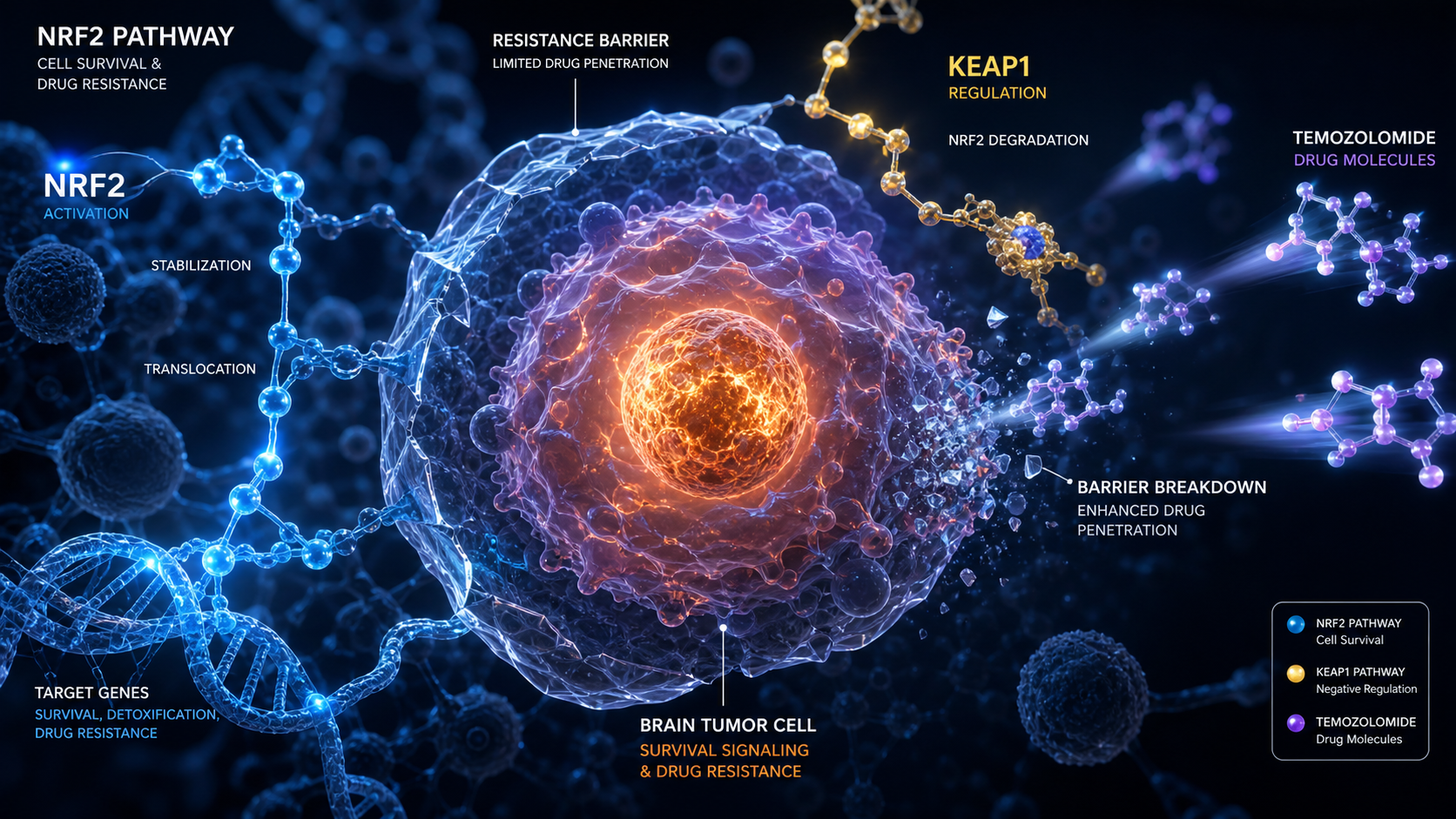
Central to these defenses is the NRF2 pathway, a master regulator of antioxidant responses. Understanding how NRF2 contributes to chemotherapy resistance can unlock new strategies to improve treatment outcomes for GBM patients.
Study Overview: What Researchers Did
In a recent study published in Biomedical Reports, researchers led by Tripatara Pinpat explored how NRF2 signaling influences resistance to temozolomide (TMZ), the frontline chemotherapy drug for GBM, especially under hypoxic conditions.
Using U87MG glioblastoma cells cultured in either normal oxygen or 1% oxygen (hypoxia), the team examined:
- How hypoxia affects TMZ sensitivity
- The role of NRF2 nuclear accumulation and antioxidant gene expression
- Whether inhibiting NRF2 with the compound brusatol could enhance TMZ effectiveness
- The involvement of PGC-1α, a key regulator of mitochondrial function, in chemoresistance
They employed techniques like western blotting, real-time PCR, and immunofluorescence to analyze protein expression, gene regulation, and oxidative DNA damage.
Key Findings: The Results
- Hypoxia increases TMZ resistance in U87MG cells, linked to elevated HIF-1α and enhanced NRF2 nuclear accumulation.
- NRF2 inhibition with brusatol improves TMZ sensitivity under both normoxic and hypoxic conditions, although true synergy was only observed in normal oxygen.
- Hypoxia upregulates a suite of antioxidant genes—including GCLM, GPX1, GSTP1, HO-1, NQO1, and SOD1—strengthening cellular defense against oxidative stress.
- Growth factor and survival signaling genes like NF-κB, TGF-β, EGF, and EGFR are also elevated, promoting tumor cell survival.
- Hypoxia triggers a PGC-1α-driven mitochondrial transcriptional program, increasing expression of sirtuin 3, cytochrome c, and ATP synthase F1 subunit β, which supports metabolic adaptation and chemoresistance.
- Combining TMZ with brusatol suppresses antioxidant gene expression, reduces EGFR phosphorylation, dampens mitochondrial gene expression, and increases oxidative DNA damage—weakening tumor defenses.
What This Means for You: Practical Takeaways
This study highlights the critical role of NRF2 in driving resistance to chemotherapy in glioblastoma, especially in the hypoxic tumor microenvironment. For patients and clinicians, these insights suggest:
- Targeting NRF2 signaling may be a promising strategy to overcome chemoresistance and improve TMZ efficacy.
- Drugs like brusatol that inhibit NRF2 could potentially be combined with TMZ to enhance treatment outcomes.
- Understanding the tumor’s oxygen status and mitochondrial adaptations could help tailor therapies for better effectiveness.
- Future clinical trials investigating NRF2 inhibitors alongside standard chemotherapy are warranted.
Overall, this research advances our knowledge of how cancer cells use antioxidant and mitochondrial defenses to survive treatment, opening new avenues to disrupt these protective mechanisms.
Conclusion
Glioblastoma’s resistance to temozolomide remains a major hurdle in improving patient survival. This study sheds light on how hypoxia-induced NRF2 activation and PGC-1α-driven mitochondrial programs empower tumor cells to evade chemotherapy.
Pharmacological suppression of NRF2 with brusatol effectively sensitizes glioblastoma cells to TMZ, even under challenging hypoxic conditions. Targeting these cellular defense pathways offers a promising approach to enhance oxidative stress within tumors, reduce antioxidant defenses, and ultimately improve therapeutic success.
As research progresses, combining NRF2 inhibitors with existing treatments may become a key strategy in the fight against this devastating cancer.
References
Pinpat T, Tasanee O, Sunisa P, Sith S, Siwanon J. Nrf2 and PGC-1α signaling in temozolomide resistance in glioblastoma under hypoxia. Biomed Rep. 2023; DOI: 42836010