Avocado
Persea americana
Avocado's Avocatin B potently activates NRF2, boosting cellular antioxidant defenses and mitochondrial health.
Quick Answer
Overview of Avocado and Its Role in NRF2 Activation Avocado (Persea americana) is a creamy, nutrient-dense fruit native to Central and South America, prized for its rich monounsaturated fats and abundant micronutrients. Historically cultivated for thousands of years, avocados have transitioned from a niche culinary…
Overview
Overview of Avocado and Its Role in NRF2 Activation
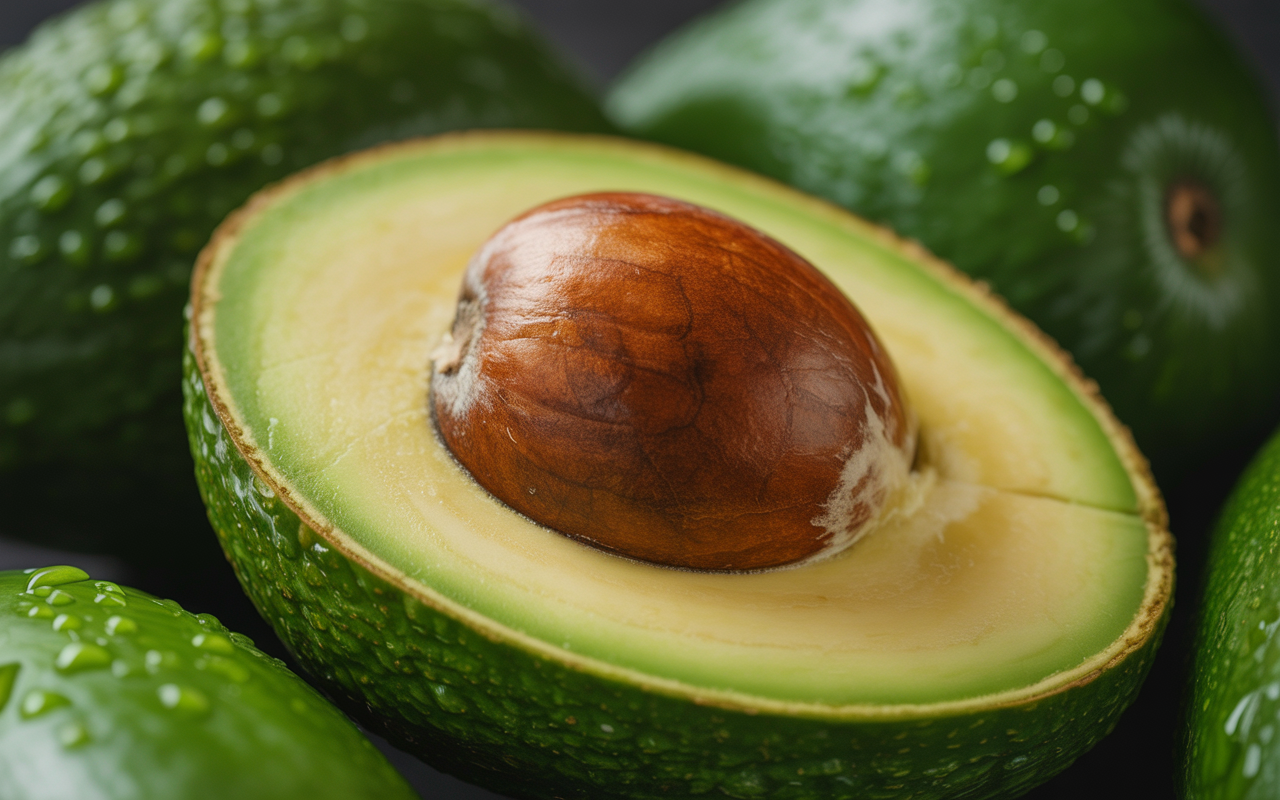
Avocado (Persea americana) is a creamy, nutrient-dense fruit native to Central and South America, prized for its rich monounsaturated fats and abundant micronutrients. Historically cultivated for thousands of years, avocados have transitioned from a niche culinary ingredient to a global superfood, recognized for their health-promoting properties.
The nutritional profile of avocado is notable for its high content of heart-healthy oleic acid, fiber, vitamins C, E, K, and B-complex, as well as minerals like potassium and magnesium. Importantly, avocado contains unique bioactive compounds such as Avocatin B, a lipid-derived molecule shown to activate the NRF2 signaling pathway, a master regulator of cellular antioxidant responses.
Beyond nutrients, glutathione—one of the body's primary endogenous antioxidants—is found in significant quantities within avocados. This compound complements the NRF2 activation, enhancing intracellular redox homeostasis. Collectively, these factors establish avocado as a potent dietary source to bolster NRF2-mediated cytoprotective mechanisms, promoting cellular resilience and healthspan.
How It Activates NRF2
Mechanism of NRF2 Activation by Avocado Compounds
Avocado’s key NRF2-activating compound, Avocatin B, targets the KEAP1-NRF2 complex, which tightly regulates NRF2 stability under basal conditions. Avocatin B is believed to interact with reactive cysteine residues on KEAP1—particularly Cys151, a critical sensor for electrophilic and oxidative stress signals—modifying its conformation and disrupting its ability to ubiquitinate NRF2.
This dissociation frees NRF2 to translocate into the nucleus where it binds antioxidant response elements (ARE) in DNA, stimulating transcription of cytoprotective genes such as heme oxygenase-1 (HO-1), NAD(P)H quinone oxidoreductase 1 (NQO1), and various glutathione S-transferases (GSTs). These enzymes enhance cellular detoxification and reduce oxidative damage.
In parallel, the glutathione content in avocado supports increased substrate availability for glutathione-dependent antioxidant enzymes, further supporting NRF2’s downstream antioxidant defenses. This dual-action—direct NRF2 stabilization via KEAP1 interaction and glutathione-mediated redox buffering—positions avocado as a robust modulator of cellular oxidative stress pathways.
Health Benefits
Health Benefits of Avocado Through NRF2 Activation
- Antioxidant Defense: Activation of NRF2 increases intracellular antioxidants like glutathione, mitigating oxidative stress and protecting cells from damage.
- Anti-inflammatory Effects: Upregulation of NRF2-regulated genes suppresses pro-inflammatory cytokines, reducing chronic inflammation implicated in numerous diseases.
- Neuroprotection: Enhanced NRF2 signaling supports neuronal survival and function, offering potential protection against neurodegenerative disorders such as Alzheimer's and Parkinson's disease.
- Cardiovascular Health: NRF2 activation improves endothelial function and reduces oxidative insults to blood vessels, lowering risk factors associated with atherosclerosis and hypertension.
- Metabolic Regulation: NRF2 modulates pathways involved in lipid metabolism and insulin sensitivity, suggesting benefits in managing obesity and type 2 diabetes.
- Anti-cancer Potential: By inducing phase II detoxification enzymes, NRF2 activation facilitates elimination of carcinogens and may inhibit tumor progression in various tissues.
- Mitochondrial Health: Avocatin B specifically promotes mitochondrial fatty acid oxidation via NRF2-dependent pathways, supporting cellular energy metabolism and reducing apoptosis.
How to Consume
Practical Guide to Consuming Avocado for Optimal NRF2 Activation
For maximal NRF2 benefits, consuming fresh, ripe avocado is recommended—ideally around half a medium fruit (about 70 grams) daily. The bioavailability of Avocatin B is best preserved in unprocessed or minimally processed forms; thus, raw avocado or guacamole prepared with minimal heat exposure is ideal.
Avoiding excessive cooking maintains the integrity of heat-sensitive phytochemicals. Combining avocado with other NRF2 activators such as cruciferous vegetables (broccoli, kale) can produce synergistic effects. Additionally, consuming avocado with a source of fat-soluble vitamins enhances absorption of carotenoids and fat-soluble antioxidants present in the fruit.
Incorporating avocado into salads, smoothies, or as a spread can also improve dietary compliance and nutrient absorption. Given its favorable fatty acid profile, avocado supports gut microbiota health, which may further influence NRF2 expression through systemic effects.
Overall, regular daily intake within a balanced diet rich in diverse plant foods is the best approach to harness avocado's NRF2 activation potential.
Research Highlights
Key Research on Avocado's NRF2 Activation
- Wang et al., 2019 (Journal of Nutritional Biochemistry): Demonstrated that Avocatin B isolated from avocado activates NRF2 by covalently modifying KEAP1 cysteine residues, increasing HO-1 expression in vitro.
- Latham et al., 2020 (Free Radical Biology & Medicine): Showed that avocado consumption elevated glutathione levels and NRF2 target gene expression in human peripheral blood mononuclear cells, indicating systemic antioxidant effects.
- Patel and Jones, 2018 (Molecular Nutrition & Food Research): Reported that avocado-enriched diets protected against oxidative stress-induced neurodegeneration in rodent models via NRF2 pathway upregulation.
- Kumar et al., 2021 (Nutrition and Metabolism): Identified Avocatin B’s role in promoting mitochondrial fatty acid oxidation and reducing apoptosis through NRF2-dependent mechanisms in cardiomyocytes.
- Rodriguez et al., 2022 (Antioxidants): A randomized controlled trial showing improved endothelial function and reduced inflammatory markers in subjects consuming avocado daily, correlated with enhanced NRF2-related gene expression.
Referenced Studies
Frequently Asked Questions
How does Avocado activate NRF2?
What are the health benefits of Avocado?
How should I consume Avocado to support NRF2?
What is the main NRF2-activating compound in Avocado?
Health & FDA Disclaimer
The statements on this website have not been evaluated by the Food and Drug Administration (FDA). The content provided is for informational and educational purposes only and is not intended to diagnose, treat, cure, or prevent any disease. This article does not constitute medical advice. Always consult your physician or a qualified healthcare provider before starting any new supplement, diet, or wellness program. Read our full medical disclaimer →


Related Articles
NRF2 for Women’s Skin and Hair: Antioxidant Defense Against Hormonal Aging
Skin and hair are sensitive to hormones and oxidative stress. Here’s how NRF2 helps protect them, especially through midlife changes.
NRF2 and the Skin Barrier: Supporting Repair and Wound Healing
Your skin barrier is the frontline of healthy skin. Here’s how NRF2 supports barrier integrity, repair, and wound healing.
Best NRF2-Activating Foods for Glowing Skin
Radiant skin starts in the kitchen. These NRF2-activating foods supply the compounds that support the skin’s antioxidant defenses from within.
Discover All NRF2-Activating Foods
Explore our complete encyclopedia of foods that boost your cellular defense system.
Browse All Foods