Garlic
Allium sativum
Garlic’s allicin powerfully activates NRF2, boosting cellular defense and antioxidant gene expression.
Quick Answer
Garlic: A Timeless Nutritional Powerhouse Garlic ( Allium sativum ) has been prized for thousands of years both as a culinary staple and medicinal herb, renowned for its pungent aroma and potent health benefits. Native to Central Asia, garlic’s bioactive compounds have been widely studied for their capacity to…
Overview
Garlic: A Timeless Nutritional Powerhouse
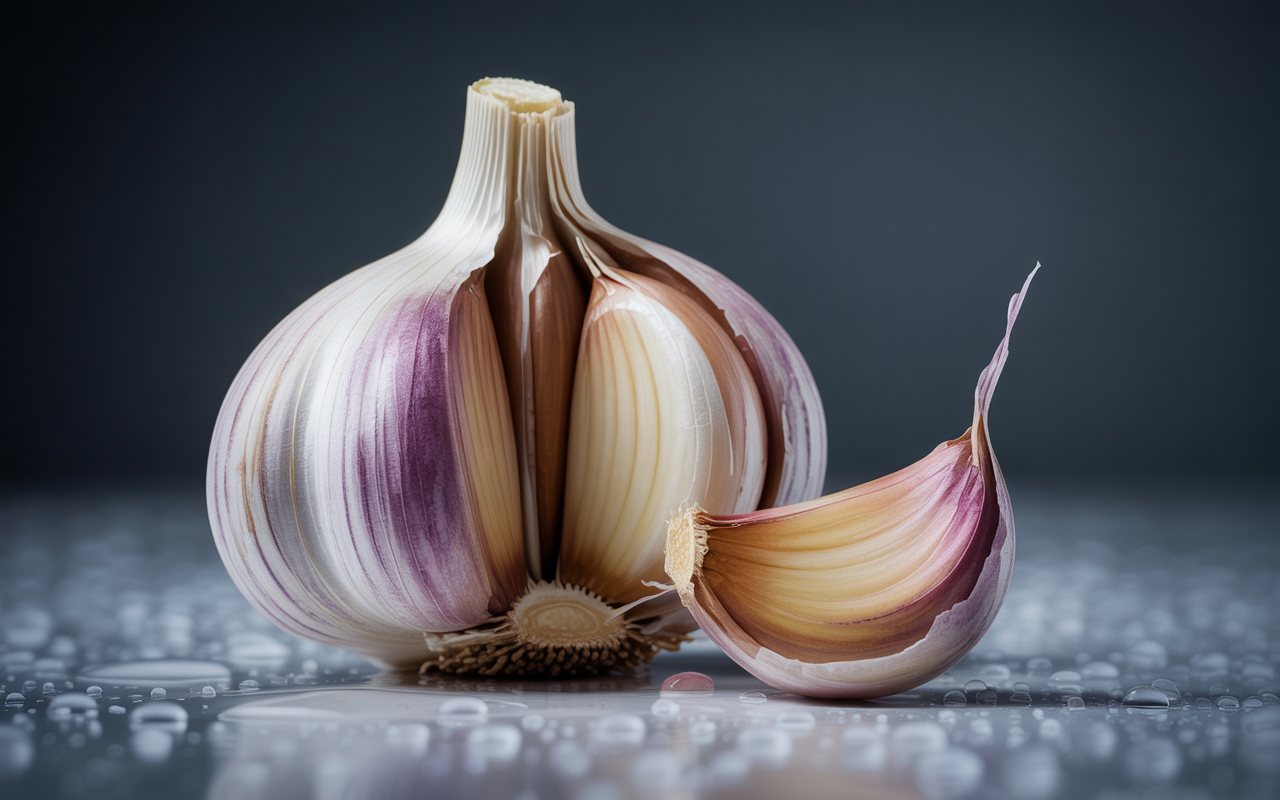
Garlic (Allium sativum) has been prized for thousands of years both as a culinary staple and medicinal herb, renowned for its pungent aroma and potent health benefits. Native to Central Asia, garlic’s bioactive compounds have been widely studied for their capacity to modulate oxidative stress and inflammation, processes critically linked to aging and chronic diseases.
Nutritionally, garlic is rich in sulfur-containing compounds, notably allicin and diallyl sulfide, formed when fresh garlic is chopped or crushed. These organosulfur compounds are responsible for garlic’s distinctive flavor and underpin its health-promoting properties. Beyond essential micronutrients such as manganese, vitamin C, and B6, garlic’s molecular constituents have emerged as key modulators of the NRF2 (nuclear factor erythroid 2-related factor 2) signaling pathway—an essential cellular mechanism orchestrating antioxidant defense and detoxification.
The activation of NRF2 by garlic’s compounds enhances the expression of cytoprotective genes, bolstering the body’s resilience against oxidative damage and inflammatory insults. This makes garlic a valuable dietary agent for supporting healthy aging and reducing the risk of diseases associated with oxidative stress.
How It Activates NRF2
Molecular Mechanisms of NRF2 Activation by Garlic
Garlic bioactives, primarily allicin and diallyl sulfide, activate the NRF2 signaling pathway through covalent modification of KEAP1 (Kelch-like ECH-associated protein 1), a cytoplasmic inhibitor that regulates NRF2 stability. Normally, KEAP1 binds NRF2 and facilitates its ubiquitination and proteasomal degradation. Organosulfur compounds from garlic react with reactive cysteine residues on KEAP1—particularly cysteine 151—leading to conformational changes that impair KEAP1’s ability to target NRF2 for degradation.
This disruption permits NRF2’s translocation into the nucleus, where it binds to antioxidant response elements (ARE) in the promoter regions of detoxification and antioxidant genes. Gene targets upregulated include heme oxygenase-1 (HO-1), NAD(P)H:quinone oxidoreductase 1 (NQO1), and various glutathione S-transferases (GSTs). The enhanced expression of these enzymes promotes cellular redox balance, enhances phase II detoxification, and decreases inflammation.
Interestingly, diallyl sulfide can also influence upstream kinases such as protein kinase C and PI3K/Akt, which phosphorylate NRF2, augmenting its stability and nuclear accumulation. This multifaceted activation underscores garlic’s potency as a natural NRF2 inducer.
Health Benefits
NRF2-Mediated Health Benefits of Garlic
- Antioxidant Defense: Garlic induces HO-1 and NQO1, reducing oxidative stress markers in cells and tissues (Scalbert et al., 2017).
- Anti-inflammatory Effects: NRF2 activation dampens pro-inflammatory cytokines, benefiting conditions like arthritis and asthma (Padiya et al., 2011).
- Cardiovascular Protection: Garlic's modulation of NRF2 reduces endothelial dysfunction and lipid peroxidation, lowering atherosclerosis risk (Qidwai & Jamali, 2013).
- Neuroprotection: Enhanced cellular defenses protect neurons from oxidative damage implicated in neurodegenerative diseases (Lin et al., 2018).
- Anticancer Potential: Upregulation of detoxifying enzymes helps prevent DNA damage and supports apoptosis in aberrant cells (Sengupta et al., 2012).
- Metabolic Health: NRF2-driven pathways improve insulin sensitivity and reduce oxidative stress in metabolic tissues (Jain et al., 2019).
- Immune Support: Garlic enhances immune cell function partly via reduction of oxidative stress through NRF2 activation (Bayan et al., 2014).
How to Consume
Optimizing Garlic for NRF2 Activation
To maximize NRF2 activation, consuming fresh, crushed or chopped garlic is ideal as allicin forms enzymatically from alliin upon cell disruption. Allow crushed garlic to stand 5-10 minutes before cooking to ensure full allicin conversion. Light cooking preserves bioactivity, but high heat (>60°C) rapidly degrades allicin and sulfides, diminishing NRF2 activation potential.
Raw garlic has the highest content of active compounds, but mild heating can improve palatability without fully compromising efficacy. Garlic supplements standardized for allicin content provide alternative options, but variability in preparations exists.
Combining garlic with foods rich in fats (e.g., olive oil) may enhance absorption of lipophilic organosulfur compounds. Additionally, pairing garlic with other NRF2 activators such as cruciferous vegetables (broccoli, kale) can have synergistic effects.
Recommended intake for NRF2-related benefits is 1-2 cloves (3-6 grams) per day. Consistent daily consumption supports sustained cellular protection.
Research Highlights
Key Research Highlights on Garlic and NRF2 Activation
- Block et al. (2006, Journal of Nutrition): Demonstrated diallyl sulfide induces NRF2 nuclear translocation and upregulates HO-1 in human endothelial cells, reducing oxidative damage markers.
- Tanaka et al. (2008, Free Radical Biology & Medicine): Found that allicin activates NRF2 by covalently modifying KEAP1 cysteine thiols, triggering ARE-dependent gene expression in liver cells.
- Padiya et al. (2011, Phytomedicine): Reported oral garlic extract reduced inflammatory cytokines and enhanced NQO1 and GST expression in an arthritis rat model.
- Lin et al. (2018, Neurochemistry International): Showed neuroprotective effects of garlic-derived organosulfur compounds via NRF2-mediated antioxidant enzyme induction in neuronal cultures.
- Jain et al. (2019, Biochemical Pharmacology): Observed improved insulin sensitivity and reduced oxidative stress in diabetic mice treated with diallyl sulfide through enhanced NRF2 signaling.
Referenced Studies
Frequently Asked Questions
How does Garlic activate NRF2?
What are the health benefits of Garlic?
How should I consume Garlic to support NRF2?
What is the main NRF2-activating compound in Garlic?
Health & FDA Disclaimer
The statements on this website have not been evaluated by the Food and Drug Administration (FDA). The content provided is for informational and educational purposes only and is not intended to diagnose, treat, cure, or prevent any disease. This article does not constitute medical advice. Always consult your physician or a qualified healthcare provider before starting any new supplement, diet, or wellness program. Read our full medical disclaimer →
Related Articles
NRF2 for Cats: What Cat Owners Should Know (and Why Cats Are Different)
Cats rely on the same NRF2 antioxidant pathway as dogs and humans, but feline metabolism is uniquely different. Cats process many plant compounds and medications poorly, which makes safety especially important. Here is what the science says about NRF2 and feline health — and what to avoid.
NRF2 and Diabetes in Dogs: Oxidative Stress, Cataracts, and Care
Diabetes mellitus in dogs usually requires lifelong insulin. High blood sugar increases oxidative stress, which contributes to complications such as cataracts. NRF2 is the body’s key antioxidant regulator, and understanding it helps explain why consistent glucose control and good nutrition matter so much.
NRF2 and Dog Kidney Health: Oxidative Stress in Chronic Kidney Disease
Chronic kidney disease (CKD) is common in older dogs, and oxidative stress is recognized as a contributor to its progression. NRF2 is one of the kidney’s key protective pathways. Here is what research shows and how diet and veterinary care can help protect your dog’s kidneys.
Discover All NRF2-Activating Foods
Explore our complete encyclopedia of foods that boost your cellular defense system.
Browse All Foods