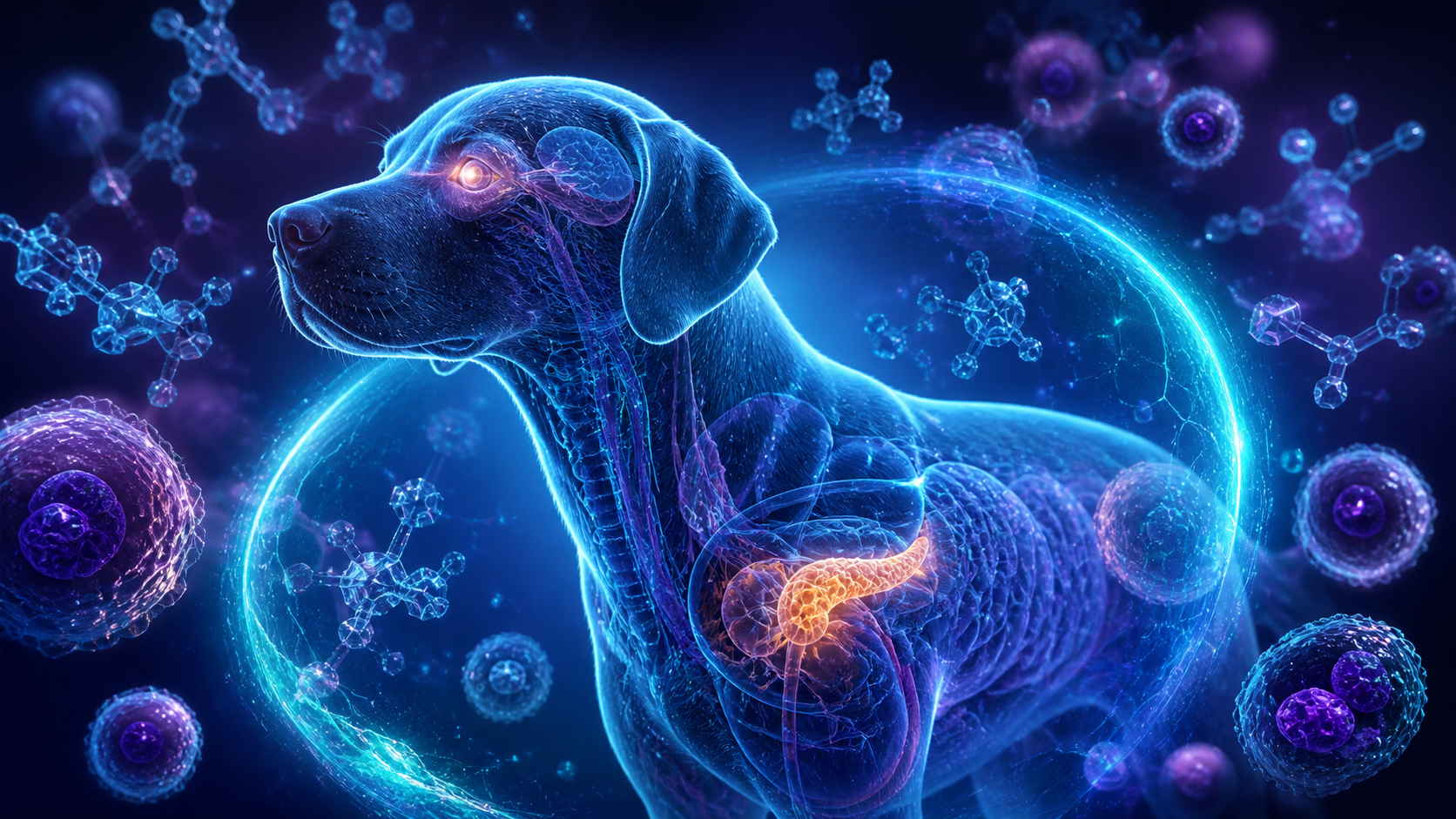
Diabetes affects roughly one in every few hundred dogs, most often middle-aged and older dogs. Unlike many humans with type 2 diabetes, most diabetic dogs have a form similar to type 1 diabetes — they cannot make enough insulin and need injections for life. Chronically elevated blood sugar creates oxidative stress, the domain of the NRF2 pathway.
How Canine Diabetes Differs
In dogs, diabetes usually results from loss of insulin-producing beta cells, sometimes following pancreatitis or immune-mediated destruction. Risk factors include breed predisposition (e.g., Miniature Schnauzers, Samoyeds, Poodles), obesity, pancreatitis, Cushing’s disease, and in unspayed females, hormonal influences. Diet alone cannot replace insulin for most diabetic dogs.
High Glucose and Oxidative Stress
Excess glucose leads to increased reactive oxygen species and the formation of damaging sugar–protein compounds. Studies in diabetic dogs have documented elevated oxidative stress markers. NRF2 normally helps counter this stress, but in human and animal research, chronic hyperglycemia may blunt the NRF2 response — see our human-focused article on NRF2 and type 2 diabetes.
Why Diabetic Dogs Get Cataracts
The majority of diabetic dogs develop cataracts, often within a year of diagnosis. Excess glucose in the lens is converted to sorbitol, drawing in water and causing oxidative damage to lens proteins. Good glucose control may slow this process, and veterinary ophthalmologists can often restore vision with cataract surgery.
Supporting a Diabetic Dog
- Consistent insulin and feeding schedules — the foundation of management.
- A consistent, high-fiber diet as recommended by your vet to reduce post-meal glucose swings.
- Healthy weight and regular exercise — keep exercise consistent day to day to avoid hypoglycemia.
- Omega-3s and antioxidant-rich foods only with vet approval, and counted into the daily diet so meals stay consistent. Dog-safe options include blueberries and lightly cooked broccoli in small amounts — see NRF2 foods safe for dogs.
Important Safety Notes
- Never change insulin doses without veterinary guidance.
- Know the signs of low blood sugar: weakness, trembling, wobbliness, or seizures — contact your vet or emergency clinic immediately.
- Some supplements may affect glucose levels; always discuss them first.
More in the NRF2 for Dogs Series
- NRF2 for Dogs: The Complete Guide
- NRF2 and Dog Kidney Health
- NRF2 and Senior Dogs
- NRF2 for Dogs: Canine Health Overview
Frequently Asked Questions
Can NRF2 activation treat diabetes in dogs?
No. Most diabetic dogs require insulin because their pancreas no longer produces enough. NRF2-related nutrition may help with oxidative stress but cannot replace insulin therapy.
Why do diabetic dogs go blind?
Most diabetic dogs develop cataracts because excess glucose in the lens is converted to sorbitol, causing swelling and oxidative protein damage. Cataract surgery can often restore vision.
What should a diabetic dog eat?
Most vets recommend a consistent, complete diet with moderate-to-high fiber and controlled fat, fed at the same times each day alongside insulin. Your vet will tailor the diet to your dog.
Can I give my diabetic dog treats?
Some low-calorie, low-sugar treats may be fine if they are consistent and counted into the daily diet. Avoid sugary treats and anything that causes day-to-day variability. Ask your vet for suitable options.
Disclaimer: This article is for educational purposes only and is not veterinary medical advice. Always consult your veterinarian before changing your pet’s diet or adding any supplement, especially if your animal has a diagnosed condition or takes medication. Never give pets grapes/raisins, onions, garlic, chocolate, macadamia nuts, xylitol, or concentrated green tea extract.