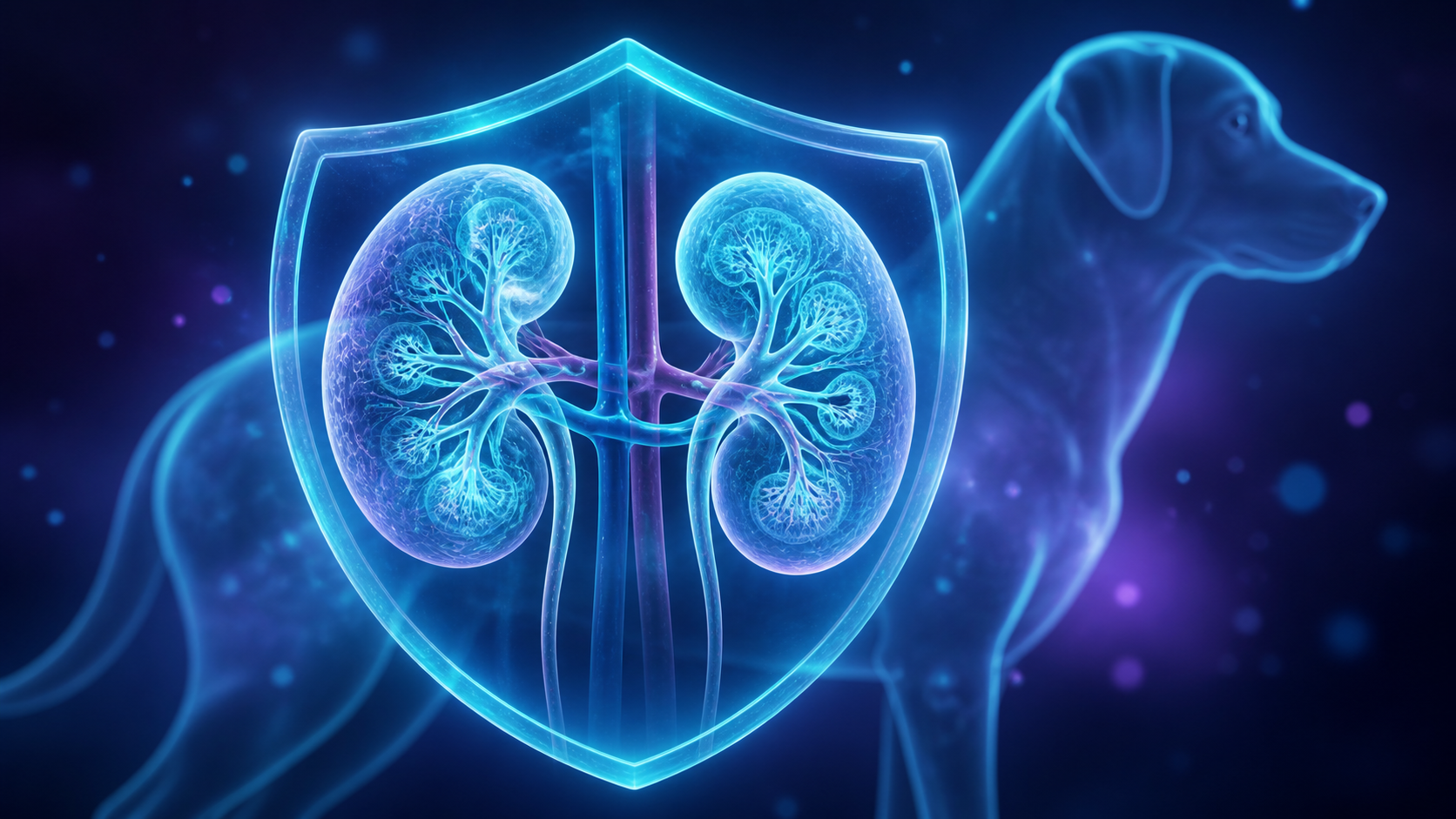
The kidneys filter the blood, balance fluids and minerals, and regulate blood pressure. In dogs, especially seniors, chronic kidney disease (CKD) is one of the most common serious diagnoses. Research in dogs and other species shows that oxidative stress contributes to kidney damage — and that NRF2 is a central part of the kidney’s defense.
Why Kidneys Are Vulnerable
Kidney cells are highly metabolically active and use large amounts of oxygen, which generates reactive oxygen species. As kidney function declines, remaining nephrons work harder, producing even more oxidative stress in a damaging cycle. Studies in dogs with CKD have reported increased oxidative-stress markers.
NRF2 and the Kidney
NRF2 activates antioxidant and anti-inflammatory genes in kidney cells. In laboratory research, NRF2 activation protects kidneys against drug-induced and toxic injury. Our research summaries on rosmarinic acid and kidney protection and NRF2 and kidney disease progression explore this in more depth. In human medicine, a drug that strongly activates NRF2 (bardoxolone methyl) showed both kidney-function effects and safety concerns — a reminder that more NRF2 is not automatically better.
What Actually Helps Dogs With CKD
- Veterinary kidney diets — phosphorus-restricted therapeutic diets are the best-proven intervention for extending quality of life in dogs with CKD. Many contain added antioxidants and omega-3s.
- Omega-3 fatty acids — fish oil has shown kidney benefits in canine studies.
- Hydration — always provide fresh water; your vet may recommend fluids.
- Blood pressure and protein-in-urine management as directed by your vet.
Important Cautions
- Do not add homemade foods or supplements to a kidney diet without your vet’s approval — many add phosphorus, potassium, or protein that can upset the balance.
- Grapes and raisins can cause acute kidney failure in dogs and must be avoided completely.
- NSAIDs and some other medications require careful use in dogs with kidney disease.
Early Detection
Increased thirst and urination, weight loss, reduced appetite, vomiting, and bad breath can signal kidney problems. Blood tests including SDMA can detect decline earlier than traditional markers. See NRF2 and senior dogs for more on age-related screening.
More in the NRF2 for Dogs Series
- NRF2 for Dogs: The Complete Guide
- NRF2 and Dog Liver Health
- NRF2 and Dog Heart Health
- NRF2 for Dogs: Canine Health Overview
Frequently Asked Questions
Can NRF2 help dogs with kidney disease?
NRF2 protects kidney cells from oxidative damage in laboratory studies, but there is no NRF2-based treatment approved for dogs. Kidney diets, omega-3s, hydration, and veterinary management remain the proven approaches.
What is the best diet for a dog with kidney disease?
A veterinary therapeutic kidney diet with restricted phosphorus and moderate high-quality protein has the strongest evidence. Your vet will recommend one based on your dog’s stage of disease.
Are broccoli and blueberries safe for dogs with CKD?
They may be acceptable in small amounts for some dogs, but they add potassium and other nutrients. Always check with your vet before adding any food to a kidney diet.
Why are grapes dangerous for dogs’ kidneys?
Grapes and raisins can cause sudden, severe kidney failure in dogs, even in small amounts. The toxic component is believed to be tartaric acid. If your dog eats any, contact your vet immediately.
Disclaimer: This article is for educational purposes only and is not veterinary medical advice. Always consult your veterinarian before changing your pet’s diet or adding any supplement, especially if your animal has a diagnosed condition or takes medication. Never give pets grapes/raisins, onions, garlic, chocolate, macadamia nuts, xylitol, or concentrated green tea extract.