Onions
Allium cepa
Onions activate NRF2 powerfully via quercetin and allyl sulfides, boosting cellular antioxidant defenses and detoxification enzymes.
Quick Answer
Overview of Onions (Allium cepa) Onions have been cultivated and consumed worldwide for thousands of years, valued not only for their distinctive flavor but also for their potent bioactive compounds that promote health. As a member of the Allium genus, onions are rich in unique phytochemicals like quercetin and allyl…
Overview
Overview of Onions (Allium cepa)
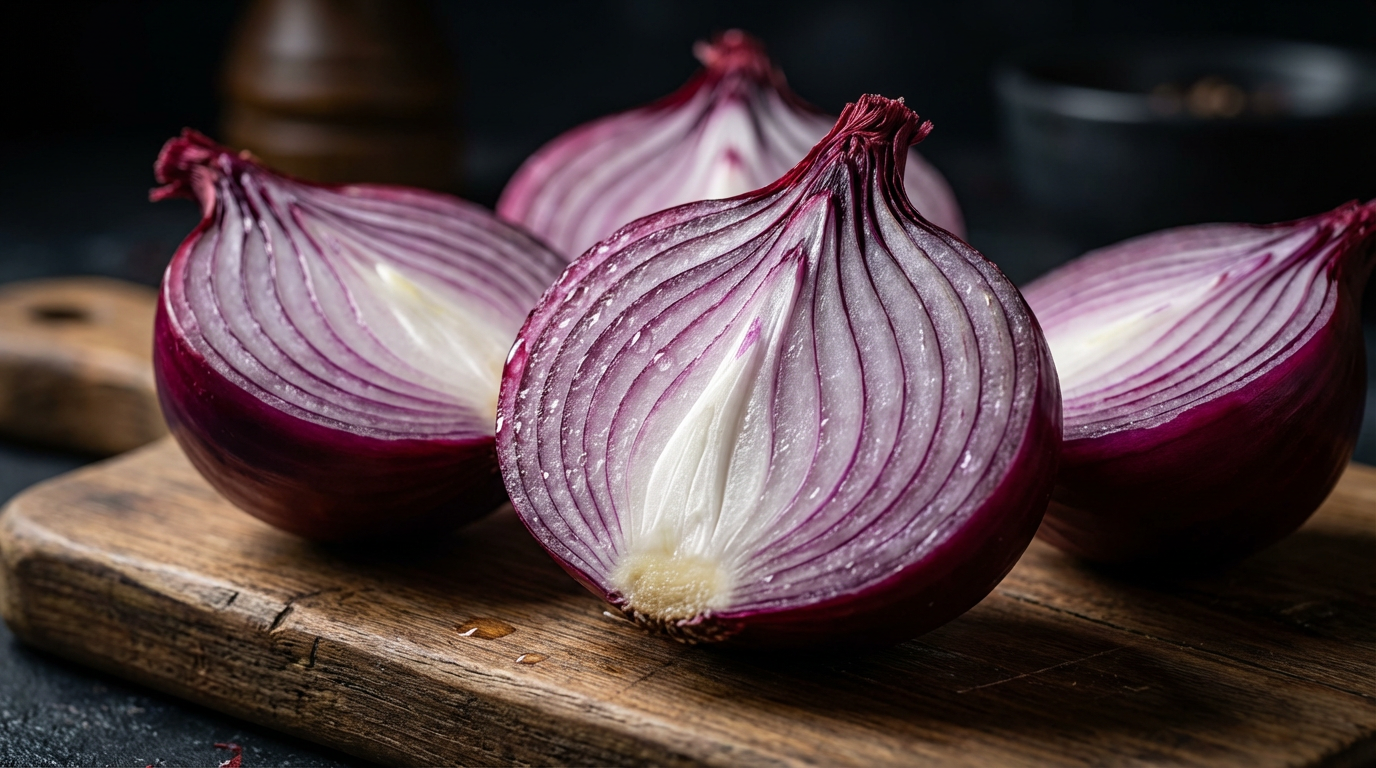
Onions have been cultivated and consumed worldwide for thousands of years, valued not only for their distinctive flavor but also for their potent bioactive compounds that promote health. As a member of the Allium genus, onions are rich in unique phytochemicals like quercetin and allyl sulfides, which contribute to their numerous medicinal properties.
Nutritionally, onions provide dietary fiber, vitamins C and B6, and trace minerals, but their most significant health impact arises from their polyphenols and sulfur-containing compounds. These molecules have been shown to activate the NRF2 pathway, a master regulator of cellular antioxidant and detoxification responses, positioning onions as a functional food with strong potential for mitigating oxidative stress and inflammation.
By stimulating NRF2, onions help upregulate cytoprotective genes that maintain redox homeostasis, protect DNA integrity, and combat chronic diseases linked to oxidative damage. This mechanistic foundation supports their traditional use and contemporary interest in nutritional strategies for enhancing endogenous defense systems.
How It Activates NRF2
How Onions Activate the NRF2 Pathway
The primary bioactive compounds in onions that drive NRF2 activation are quercetin, a potent flavonoid, and allyl sulfides, sulfur-containing molecules responsible for the characteristic aroma and flavor. Quercetin promotes NRF2 activation by modifying cysteine residues on KEAP1, the cytoplasmic repressor of NRF2, particularly cysteine residues Cys151 and Cys273.
Under basal conditions, KEAP1 binds NRF2 and facilitates its ubiquitination and proteasomal degradation. Quercetin and allyl sulfides covalently modify reactive cysteine thiols on KEAP1, altering its conformation and preventing NRF2 degradation. This leads to the stabilization and nuclear translocation of NRF2, where it heterodimerizes with small Maf proteins and binds to antioxidant response elements (ARE) in the DNA.
Subsequently, NRF2 induces a robust transcriptional program activating genes such as heme oxygenase-1 (HO-1), NAD(P)H:quinone oxidoreductase 1 (NQO1), and numerous glutathione S-transferases (GSTs), which enhance detoxification, antioxidative capacity, and cellular resilience. These molecular events underlie the ability of onions to enhance cellular defense systems against oxidative and electrophilic insults.
Health Benefits
Health Benefits of Onions Mediated via NRF2 Activation
- Antioxidant protection: By inducing HO-1, NQO1, and GSTs, onions reduce oxidative damage in cells, lowering risk for chronic diseases.
- Anti-inflammatory effects: NRF2 activation downregulates pro-inflammatory cytokines and pathways, mitigating chronic inflammation.
- Cardiovascular support: Quercetin-rich onions improve endothelial function, reduce blood pressure, and inhibit LDL oxidation through NRF2-mediated pathways.
- Neuroprotection: NRF2 induction by onion compounds protects neuronal cells from oxidative stress implicated in neurodegenerative diseases like Alzheimer's.
- Anti-cancer potential: Enhanced detoxification enzyme expression through NRF2 activation aids in carcinogen clearance and inhibits tumor initiation.
- Metabolic regulation: NRF2's role in maintaining cellular redox balance helps improve insulin sensitivity and may reduce risk of metabolic syndrome.
- Immune modulation: Onions can bolster immune resilience by modulating redox-sensitive immune pathways via NRF2.
How to Consume
How to Consume Onions for Optimal NRF2 Activation
Raw onions retain the highest levels of quercetin and allyl sulfides, which can be degraded by heat, so incorporating raw or lightly cooked onions into meals maximizes NRF2 activation. Thin slicing or crushing onions prior to consumption also enhances bioavailability by promoting the formation of active sulfur compounds through enzymatic processes.
Recommended daily intake for NRF2 benefits is about one medium-sized onion (~150 grams). Combining onions with foods rich in healthy fats, such as olive oil, may improve the absorption of quercetin. Additionally, pairing onions with other NRF2 activators like cruciferous vegetables (e.g., broccoli) can have synergistic effects.
Onions can be eaten raw in salads, salsas, or sandwiches, or lightly sautéed to preserve bioactivity. Avoid prolonged high-heat cooking which diminishes quercetin content. Powdered onion supplements exist but whole food consumption is preferable for the complex matrix of bioactives.
Research Highlights
Key Research Highlights on Onions and NRF2 Activation
- Lohan et al. (2016, Food Chemistry): Demonstrated that quercetin-rich onion extracts activated NRF2 and upregulated HO-1 and NQO1 in human endothelial cells, contributing to vascular protection.
- Peng et al. (2018, Journal of Agricultural and Food Chemistry): Identified allyl sulfides from onions as effective in KEAP1 cysteine modification, stabilizing NRF2 and enhancing antioxidant defenses in vitro.
- Park et al. (2020, Nutrients): A clinical trial showing that daily consumption of onions improved biomarkers of oxidative stress and inflammation, linked to NRF2-mediated gene expression in healthy adults.
- Shukla & Kalra (2012, Phytotherapy Research): Reviewed the neuroprotective roles of Allium vegetables via NRF2 activation, highlighting potential roles in cognitive health.
- Nishikawa et al. (2017, Molecular Nutrition & Food Research): Reported synergistic effects of onion polyphenols with other phytochemicals in activating NRF2 and reducing carcinogen-induced DNA damage in mouse models.
Referenced Studies
Frequently Asked Questions
How does Onions activate NRF2?
What are the health benefits of Onions?
How should I consume Onions to support NRF2?
What is the main NRF2-activating compound in Onions?
Health & FDA Disclaimer
The statements on this website have not been evaluated by the Food and Drug Administration (FDA). The content provided is for informational and educational purposes only and is not intended to diagnose, treat, cure, or prevent any disease. This article does not constitute medical advice. Always consult your physician or a qualified healthcare provider before starting any new supplement, diet, or wellness program. Read our full medical disclaimer →
Related Articles
NRF2 for Cats: What Cat Owners Should Know (and Why Cats Are Different)
Cats rely on the same NRF2 antioxidant pathway as dogs and humans, but feline metabolism is uniquely different. Cats process many plant compounds and medications poorly, which makes safety especially important. Here is what the science says about NRF2 and feline health — and what to avoid.
NRF2 and Diabetes in Dogs: Oxidative Stress, Cataracts, and Care
Diabetes mellitus in dogs usually requires lifelong insulin. High blood sugar increases oxidative stress, which contributes to complications such as cataracts. NRF2 is the body’s key antioxidant regulator, and understanding it helps explain why consistent glucose control and good nutrition matter so much.
Harnessing NRF2 to Combat Antimony- and NSAID-Induced Liver Damage
Drug- and metal-induced liver injury, especially from antimony and NSAIDs, poses serious health risks due to oxidative stress and inflammation. Recent research highlights how these toxins disrupt cellular defenses, triggering programmed cell death pathways. Central to this process is the NRF2 antioxidant pathway, which natural compounds like curcumin and resveratrol can activate to protect liver cells. This blog explores the molecular mechanisms of hepatotoxicity and the promising role of natural hepatoprotective agents in mitigating liver damage, offering practical insights for enhancing liver health.
Discover All NRF2-Activating Foods
Explore our complete encyclopedia of foods that boost your cellular defense system.
Browse All Foods