Turmeric & Curcumin
Curcuma longa
Curcumin in turmeric powerfully activates NRF2 to boost antioxidant defense and reduce inflammation.
Quick Answer
Overview of Turmeric & Curcumin Turmeric (Curcuma longa) is a golden-yellow rhizome widely used as a culinary spice and traditional medicine in South Asia for thousands of years. Its principal bioactive compound, curcumin, has garnered extensive scientific attention due to its potent biological activities. Turmeric…
Overview
Overview of Turmeric & Curcumin
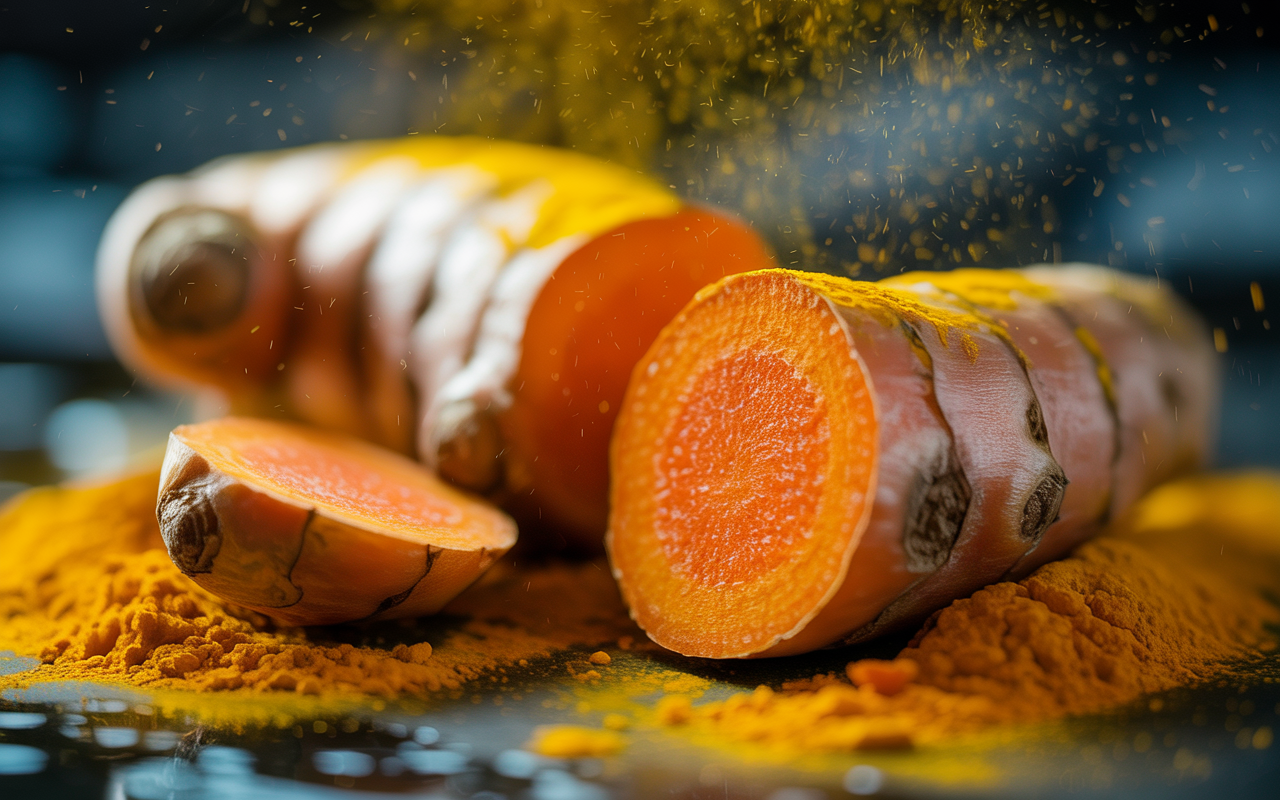
Turmeric (Curcuma longa) is a golden-yellow rhizome widely used as a culinary spice and traditional medicine in South Asia for thousands of years. Its principal bioactive compound, curcumin, has garnered extensive scientific attention due to its potent biological activities. Turmeric contains polyphenols and other minor curcuminoids, but curcumin remains the primary agent responsible for its health-promoting properties.
In addition to its culinary applications, turmeric has been used historically in Ayurveda and traditional Chinese medicine for its anti-inflammatory, antimicrobial, and antioxidant effects. Nutritionally, turmeric provides small amounts of essential nutrients but is valued mainly for its phytochemical content. The ability of curcumin to activate the nuclear factor erythroid 2–related factor 2 (NRF2) pathway—an important regulator of cellular antioxidant defenses—places turmeric at the forefront of nutraceuticals targeting oxidative stress and inflammation modulation.
Given the growing body of evidence highlighting oxidative stress as a central factor in chronic diseases, turmeric's NRF2 activation potential provides mechanistic support for its wide-ranging therapeutic applications and positions it as a valuable food compound for healthspan interventions.
How It Activates NRF2
How Turmeric Activates NRF2
Curcumin activates the NRF2 pathway primarily through interaction with the Kelch-like ECH-associated protein 1 (KEAP1), a cytoplasmic inhibitor of NRF2. Under basal conditions, KEAP1 binds NRF2 and facilitates its ubiquitination and proteasomal degradation. Curcumin acts as an electrophilic molecule, modifying specific reactive cysteine residues on KEAP1—particularly cysteine 151—which leads to a conformational change that inhibits KEAP1's ability to ubiquitinate NRF2.
This results in stabilization and nuclear translocation of NRF2, where it binds to antioxidant response elements (ARE) in the promoter regions of target genes. Curcumin-induced NRF2 activation increases transcription of cytoprotective genes such as heme oxygenase-1 (HO-1), NAD(P)H quinone oxidoreductase 1 (NQO1), and various glutathione S-transferases (GSTs). These downstream enzymes enhance cell antioxidant capacity, detoxification, and maintenance of redox homeostasis.
Additionally, curcumin may modulate upstream kinases such as protein kinase C (PKC), PI3K/Akt, and mitogen-activated protein kinases (MAPKs), which contribute to NRF2 phosphorylation and activation. This multi-modal activation underpins curcumin’s robust induction of endogenous defense systems.
Health Benefits
Health Benefits Mediated by NRF2 Activation
- Anti-inflammatory effects: By inducing HO-1 and other phase II enzymes, curcumin reduces pro-inflammatory mediators, dampening chronic inflammation (Aggarwal & Harikumar, 2009).
- Antioxidant defense: Enhanced expression of NQO1 and GSTs helps neutralize reactive oxygen species, protecting cells from oxidative damage (Zhao et al., 2013).
- Neuroprotection: NRF2 activation improves neuronal resilience to oxidative stress, supporting cognitive function and reducing neurodegenerative disease risk (Scapagnini et al., 2011).
- Cardiovascular health: Curcumin reduces oxidative damage to endothelial cells and improves vascular function via NRF2-mediated gene expression (Sikora et al., 2010).
- Anti-cancer properties: Activation of detoxifying enzymes supports chemical carcinogen metabolism and apoptosis in malignant cells (Hussain et al., 2017).
- Metabolic syndrome modulation: NRF2 enhancement improves insulin signaling and reduces oxidative stress in metabolic tissues (Liu et al., 2015).
How to Consume
How to Consume Turmeric for Optimal NRF2 Activation
Curcumin’s bioavailability is relatively low due to poor absorption, rapid metabolism, and systemic elimination. To maximize its NRF2 activation potential, consider consuming standardized curcumin extracts combined with bioavailability enhancers such as piperine from black pepper, which inhibits glucuronidation and increases plasma concentrations.
Traditional culinary use involves mixing turmeric powder into cooked dishes with fats (e.g., oils, milk) to enhance curcumin solubility and absorption. Supplements typically provide 500-1000 mg of standardized curcumin daily for clinical effects on NRF2. Formulations using nanoparticles, liposomes, or phospholipid complexes can further improve delivery.
Pairing turmeric with other NRF2 activators such as sulforaphane-rich cruciferous vegetables or resveratrol may provide additive benefits. It is advisable to consume turmeric with meals for better absorption rather than on an empty stomach. Regular, sustained intake is important for consistent NRF2 pathway activation and downstream benefits.
Research Highlights
Research Highlights
- Chandra et al. (2015, Molecular Nutrition & Food Research): Demonstrated curcumin’s ability to activate NRF2 and induce antioxidant enzymes in human cell lines, showing dose-dependent effects.
- Belcaro et al. (2014, Phytotherapy Research): A randomized clinical trial indicating improved markers of oxidative stress and inflammation in patients receiving curcumin supplementation with enhanced bioavailability.
- Zhao et al. (2013, Free Radical Biology & Medicine): Preclinical study showing curcumin’s modification of KEAP1 cysteine residues and subsequent NRF2 nuclear translocation in rodent models.
- Scapagnini et al. (2011, Current Pharmaceutical Biotechnology): Review covering curcumin’s neuroprotective role through NRF2 activation and antioxidant gene upregulation in the brain.
Referenced Studies
Frequently Asked Questions
How does Turmeric & Curcumin activate NRF2?
What are the health benefits of Turmeric & Curcumin?
How should I consume Turmeric & Curcumin to support NRF2?
What is the main NRF2-activating compound in Turmeric & Curcumin?
Health & FDA Disclaimer
The statements on this website have not been evaluated by the Food and Drug Administration (FDA). The content provided is for informational and educational purposes only and is not intended to diagnose, treat, cure, or prevent any disease. This article does not constitute medical advice. Always consult your physician or a qualified healthcare provider before starting any new supplement, diet, or wellness program. Read our full medical disclaimer →
More Spices & Herbs Foods

Related Articles
NRF2 for Aging Athletes: Staying Strong in Your Masters Years
Recovery gets harder with age partly because NRF2 activity declines. Here’s how masters athletes can support the pathway and keep performing.
NRF2 for Canine Cognitive Dysfunction ("Doggy Dementia"): Neuroprotection Through Diet
Canine Cognitive Dysfunction is driven partly by neuronal oxidative stress. Learn how NRF2 activation and brain-supportive nutrients may help protect your aging dog's mind.
NRF2 Oxidative Stress Prevention: How the Body's Master Defender Works
Learn how the NRF2 pathway protects cells from oxidative stress, the research behind it, and what evidence-based activation means for health.
Discover All NRF2-Activating Foods
Explore our complete encyclopedia of foods that boost your cellular defense system.
Browse All Foods