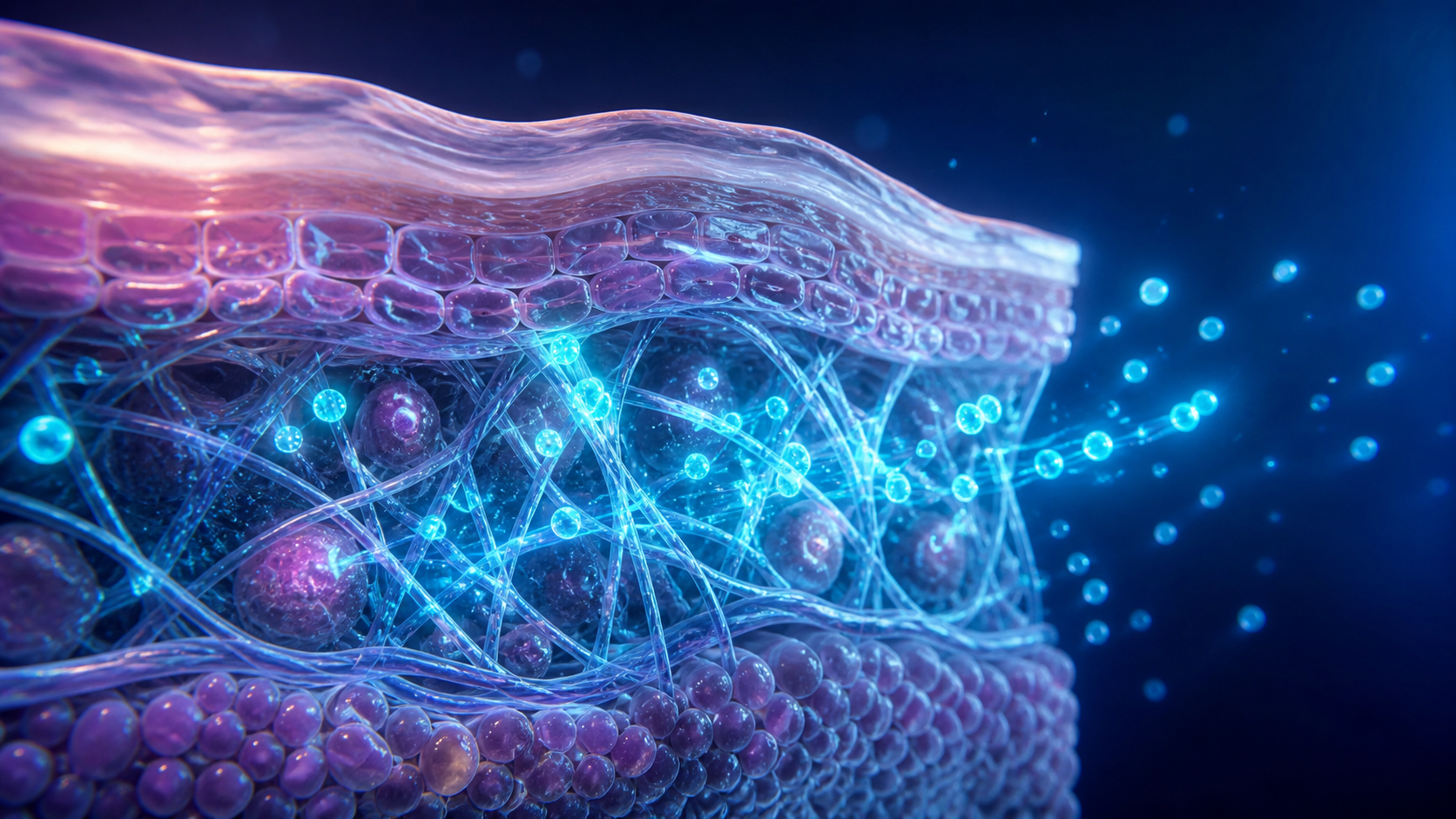
Your skin is the body’s largest organ and its first line of defense against the outside world — ultraviolet radiation, pollution, and countless environmental stressors that generate oxidative stress. At the center of the skin’s built-in defense system sits a protein called NRF2 (Nuclear factor erythroid 2–related factor 2), often described as the master regulator of the body’s antioxidant response.
When NRF2 is activated, it switches on hundreds of protective genes that neutralize free radicals, recycle antioxidants, and help skin cells repair themselves. As we age — and after years of sun exposure — NRF2 activity tends to decline, which many researchers link to visible signs of aging. This guide is the hub of our skin series; each section links to a deeper article on a specific topic.
What NRF2 Does for Skin
NRF2 governs the skin’s response to damage at the cellular level. Its key roles include:
- Neutralizing free radicals generated by UV light and pollution before they damage DNA, proteins, and lipids.
- Boosting the skin’s own antioxidants such as glutathione, rather than relying only on antioxidants applied from outside.
- Protecting collagen and elastin, the structural proteins that keep skin firm and elastic. Learn more in NRF2 and collagen.
- Calming inflammation that drives conditions like eczema, psoriasis, and acne — explored in NRF2 and inflammatory skin conditions.
- Supporting barrier repair and wound healing, covered in NRF2, the skin barrier and wound healing.
NRF2 and the Signs of Skin Aging
Most visible aging — fine lines, wrinkles, loss of firmness, and uneven tone — is driven in large part by cumulative oxidative stress. Our article on NRF2 and skin aging explains how free radicals break down the skin’s structure over time, and why a robust NRF2 response is associated with a more youthful appearance. For the bigger picture on how NRF2 relates to biological aging throughout the body, see NRF2, aging and lifespan.
The Sun: Skin’s Biggest Oxidative Challenge
Ultraviolet radiation is the single largest external driver of premature skin aging — a process called photoaging. NRF2 is a central part of how skin cells cope with UV-induced oxidative stress. Read NRF2 and UV / sun protection to understand how internal antioxidant defenses complement (but never replace) sunscreen, and see how NRF2 activation can benefit your skin in summer.
Pigmentation and Even Tone
Dark spots, melasma, and uneven tone are influenced by the interplay between oxidative stress and melanin production. Our article on NRF2 and hyperpigmentation explores this redox–melanin connection and the compounds being studied for a more even complexion.
How to Support NRF2 for Better Skin
There are three broad, evidence-informed ways to support NRF2 for skin health:
- Diet: NRF2-activating foods rich in compounds like sulforaphane and polyphenols. See the best NRF2-activating foods for glowing skin and the standout ingredient in sulforaphane for skin.
- Topicals and supplements: How serums and oral supplements compare is covered in topical vs. internal NRF2 activation. For a real-world example of NRF2 entering mainstream skincare, see Estée Lauder’s NRF2 anti-aging launch.
- Lifestyle: Sun protection, sleep, and stress management all influence oxidative load on the skin.
Explore each spoke article above to go deeper. Together they form a complete, science-informed picture of how the NRF2 pathway shapes the health and appearance of your skin.
This article is for educational purposes only and is not medical advice. Skin conditions have many causes, and NRF2 activation affects each person differently. Consult a qualified dermatologist or healthcare provider before starting any new supplement or topical regimen — especially if you are pregnant, breastfeeding, taking medication, or managing a diagnosed skin condition.
Frequently Asked Questions
What is NRF2 and why does it matter for skin?
NRF2 is a protein that acts as the master switch for the body’s antioxidant defense system. In skin, it activates protective genes that neutralize free radicals from UV light and pollution, support collagen, and reduce inflammation — all of which influence how skin ages and repairs itself.
Can boosting NRF2 really make my skin look younger?
NRF2 activation is associated in research with reduced oxidative damage and better cellular repair, which relate to visible aging. However, no single pathway is a fountain of youth. NRF2 support works best alongside sun protection, good nutrition, and an overall healthy lifestyle. Results vary between individuals.
Is it better to get NRF2 support from food, supplements, or skincare?
Each has a role. Diet provides broad, sustained support; topicals target the skin directly; supplements offer concentrated doses. Most evidence points to a food-first approach with targeted topicals or supplements as additions. See our article on topical vs. internal NRF2 activation for details.
Does NRF2 replace the need for sunscreen?
No. NRF2 helps skin cope with oxidative stress after UV exposure, but it does not block UV rays. Sunscreen remains the most important tool for preventing photoaging and skin cancer. Think of NRF2 support as a complement to — never a replacement for — sun protection.