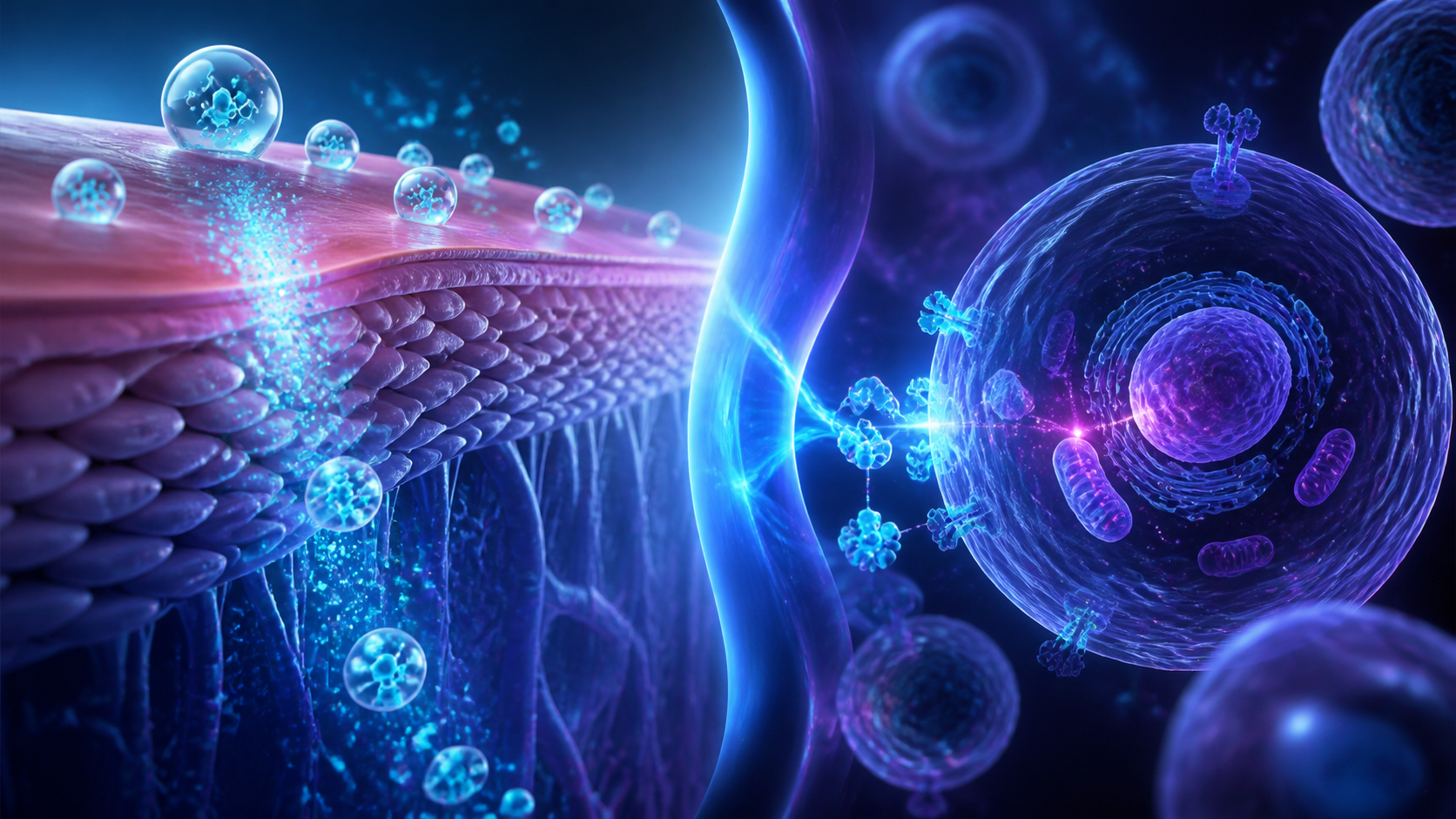
NRF2 has moved from the research lab into mainstream skincare — even major beauty brands now market NRF2 activation, as covered in our piece on Estée Lauder’s NRF2 anti-aging launch. But should you support NRF2 through topical products, internal supplements and diet, or both? Here is how the approaches compare.
Topical NRF2 Activation
Topical products aim to activate NRF2 directly in the skin where you apply them. Common NRF2-related topical ingredients include sulforaphane (broccoli-sprout extract), certain forms of vitamin C and E, and plant polyphenols.
- Pros: Targets a specific area directly; can deliver high local concentrations; works alongside other proven actives.
- Cons: Penetration and stability vary widely between products; effects are localized; quality and formulation matter enormously.
Internal NRF2 Activation
Diet and supplements activate NRF2 throughout the body, including the skin. This is the approach behind NRF2-activating foods for glowing skin and sulforaphane supplementation.
- Pros: Whole-body benefit; supported by a broad research base; food-based approach is safe and sustainable.
- Cons: Effects are systemic rather than targeted; supplement quality varies; results build slowly over weeks to months.
What the Evidence Favors
The strongest and most consistent evidence is for internal, food-based NRF2 support, because it is well studied and inherently safe. Topical NRF2 activation is promising — the broccoli-sprout UV studies are notable — but results depend heavily on the specific formulation. For most people, a sensible strategy is:
- Foundation: an NRF2-supportive diet plus daily sun protection.
- Add-on: well-formulated topicals with proven delivery, and standardized supplements if desired.
A Word on Supplements
NRF2 supplements can be useful but are not regulated like medicines, so quality varies. More is not always better — the body’s stress-response pathways favor balance (a principle called hormesis). Choose standardized products and consult a healthcare provider, especially if pregnant, breastfeeding, or on medication. Start with the complete guide to NRF2 for skin for the big picture.
This article is for educational purposes only and is not medical advice. Skin conditions have many causes, and NRF2 activation affects each person differently. Consult a qualified dermatologist or healthcare provider before starting any new supplement or topical regimen — especially if you are pregnant, breastfeeding, taking medication, or managing a diagnosed skin condition.
Frequently Asked Questions
Do NRF2 skincare products actually work?
Some do, but results depend heavily on formulation, ingredient stability, and skin penetration. The broccoli-sprout extract studies for UV protection are encouraging, but the skincare market is uneven. Look for products with credible ingredients and, ideally, published evidence rather than marketing claims alone.
Should I take an NRF2 supplement for my skin?
A supplement can be a reasonable add-on, but it is not necessary for everyone. A varied, plant-rich diet provides substantial NRF2 support. If you choose a supplement, pick a standardized product and consult a healthcare provider first — especially if pregnant, breastfeeding, or taking medication.
Is more NRF2 activation always better?
No. The body’s antioxidant response works best in balance, a concept called hormesis. Constantly overwhelming these pathways with mega-doses is not clearly beneficial and could theoretically be counterproductive. Moderate, consistent support is the sensible goal.
Can I combine topical and dietary NRF2 support?
Yes, and that is often the best approach. Diet provides broad, systemic support while well-chosen topicals target specific areas. Combined with sun protection, this layered strategy addresses skin from multiple angles.