Broccoli Sprouts
Brassica oleracea var. italica
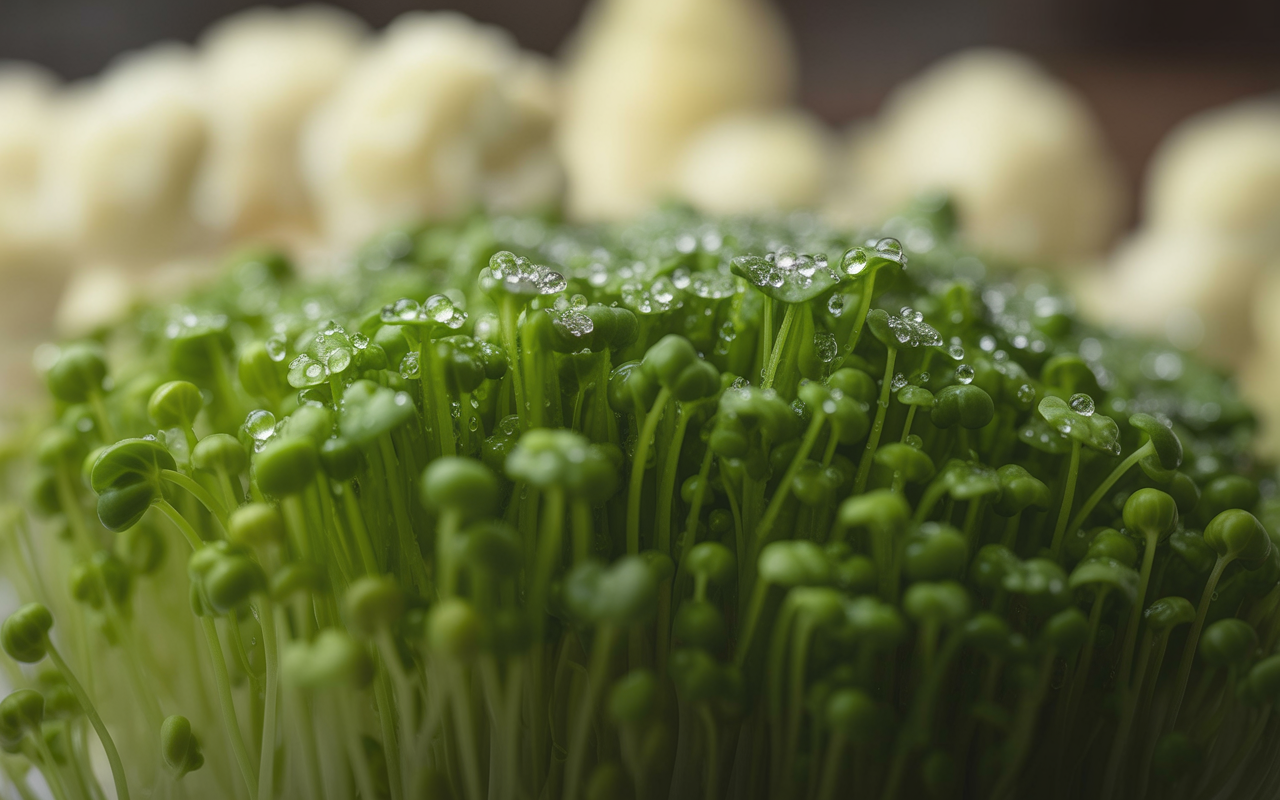
Broccoli sprouts are a potent source of sulforaphane, one of the most powerful natural activators of the NRF2 antioxidant pathway.
Quick Answer
Introduction to Broccoli Sprouts Broccoli sprouts, the young seedlings of Brassica oleracea var. italica, have garnered significant attention due to their exceptionally high concentrations of sulforaphane, a sulfur-containing isothiocyanate renowned for its health-promoting properties. These sprouts resemble alfalfa…
Overview
Introduction to Broccoli Sprouts
Broccoli sprouts, the young seedlings of Brassica oleracea var. italica, have garnered significant attention due to their exceptionally high concentrations of sulforaphane, a sulfur-containing isothiocyanate renowned for its health-promoting properties. These sprouts resemble alfalfa sprouts and are typically harvested 3-5 days after germination. Historically, broccoli sprouts were used primarily as a health food in East Asia but have since gained global recognition for their unique phytochemical profile.
Nutritionally, broccoli sprouts are low in calories, rich in vitamins C, A, and K, and contain dietary fiber, minerals, and a range of glucosinolates, particularly glucoraphanin—the precursor to sulforaphane. The enzymatic conversion of glucoraphanin to sulforaphane is catalyzed by the plant enzyme myrosinase during chewing or processing. Importantly, sulforaphane is among the most potent natural inducers of the NRF2 pathway, a master regulator of cellular antioxidant responses.
This potent activation explains why broccoli sprouts have become a focus of nutrition science and clinical research aimed at modulating oxidative stress and inflammation, underlying many chronic diseases.
How It Activates NRF2
Molecular Mechanism of NRF2 Activation by Broccoli Sprouts
Sulforaphane from broccoli sprouts activates the NRF2 (nuclear factor erythroid 2-related factor 2) pathway through direct modification of KEAP1 (Kelch-like ECH-associated protein 1), the cytoplasmic repressor of NRF2. KEAP1 functions as a sensor for electrophilic and oxidative stress via its reactive cysteine thiols. Sulforaphane covalently modifies critical cysteine residues on KEAP1, especially Cys151, but also Cys273 and Cys288, leading to conformational changes that inhibit KEAP1's ability to target NRF2 for ubiquitination and proteasomal degradation.
As a result, stabilized NRF2 translocates into the nucleus where it dimerizes with small Maf proteins and binds to antioxidant response elements (ARE) in the promoter regions of target genes. This induces a battery of cytoprotective genes including heme oxygenase-1 (HO-1), NAD(P)H:quinone oxidoreductase 1 (NQO1), and various phase II detoxification enzymes like glutathione S-transferases (GSTs). The increased expression of these genes enhances cellular redox balance, detoxification capacity, and resilience against oxidative insults.
Thus, sulforaphane-mediated NRF2 activation orchestrates a coordinated antioxidant and anti-inflammatory defense, fundamental to its health benefits.
Health Benefits
Health Benefits of Broccoli Sprouts via NRF2 Activation
- Anti-inflammatory: Sulforaphane reduces pro-inflammatory cytokines by upregulating NRF2-dependent genes, which suppress NF-kB activity, thereby mitigating chronic inflammation (Heiss et al., 2015).
- Antioxidant protection: Enhanced expression of HO-1 and NQO1 bolsters cellular antioxidant defenses, reducing oxidative damage linked to aging and disease (Fahey et al., 2017).
- Neuroprotection: NRF2 activation by sulforaphane has been shown to protect neuronal cells from oxidative stress, with potential benefits for neurodegenerative diseases such as Parkinson’s and Alzheimer’s (Tarozzi et al., 2013).
- Cardiovascular support: Sulforaphane improves endothelial function and reduces oxidative stress in vascular tissues, contributing to reduced risk of hypertension and atherosclerosis (Houghton et al., 2013).
- Anti-cancer properties: By inducing phase II enzymes via NRF2, broccoli sprouts support detoxification of carcinogens, inhibit cancer cell proliferation, and promote apoptosis in preclinical and some clinical studies (Zhang et al., 2015).
- Metabolic health: NRF2 activation improves insulin sensitivity and reduces chronic low-grade inflammation linked to metabolic syndrome (Yoh et al., 2008).
How to Consume
Consumption Guide for Optimal NRF2 Activation
To maximize sulforaphane bioavailability, consume fresh broccoli sprouts raw or lightly steamed. Cooking at high temperatures (>70°C) inactivates myrosinase, the enzyme essential for glucoraphanin conversion to sulforaphane. If consuming cooked broccoli, pairing with raw myrosinase-rich foods such as mustard seeds or radish sprouts can help regenerate sulforaphane production.
A daily intake of 20-40 grams of fresh broccoli sprouts is generally effective to achieve meaningful NRF2 activation based on clinical data. Starting with small amounts and gradually increasing may minimize potential gastrointestinal upset. Supplements standardized for sulforaphane content are also available but fresh sprouts provide synergistic phytochemicals.
Common ways to incorporate sprouts include adding them to salads, sandwiches, smoothies, or as garnish. Combining broccoli sprouts with other cruciferous vegetables further amplifies NRF2 activation due to complementary phytochemicals.
Research Highlights
Key Research Highlights
- Clarke et al., 2011 (Cancer Prevention Research): Demonstrated that daily consumption of broccoli sprouts raised phase II enzyme activity via NRF2 in human subjects, with enhanced excretion of carcinogen metabolites.
- Egner et al., 2014 (Clinical Cancer Research): Conducted a clinical trial showing sulforaphane-rich broccoli sprout beverage reduced levels of airborne pollutants and oxidative stress biomarkers in exposed populations.
- Houghton et al., 2013 (Nutrition Journal): Showed that broccoli sprout intake improved vascular endothelial function and lowered blood pressure in hypertensive subjects mediated by NRF2 activation.
- Tarozzi et al., 2013 (Oxidative Medicine and Cellular Longevity): Reviewed the neuroprotective effects of sulforaphane in cellular and animal models of neurodegeneration via NRF2 pathway induction.
- Fahey et al., 2017 (Annual Review of Nutrition): Comprehensive review highlighting the molecular mechanisms and clinical potential of sulforaphane from broccoli sprouts as an NRF2 activator with versatile health benefits.
Referenced Studies
Frequently Asked Questions
How does Broccoli Sprouts activate NRF2?
What are the health benefits of Broccoli Sprouts?
How should I consume Broccoli Sprouts to support NRF2?
What is the main NRF2-activating compound in Broccoli Sprouts?
Health & FDA Disclaimer
The statements on this website have not been evaluated by the Food and Drug Administration (FDA). The content provided is for informational and educational purposes only and is not intended to diagnose, treat, cure, or prevent any disease. This article does not constitute medical advice. Always consult your physician or a qualified healthcare provider before starting any new supplement, diet, or wellness program. Read our full medical disclaimer →
More Cruciferous Foods
Related Articles
NRF2 and Breast Health: Understanding the Antioxidant “Double-Edged Sword”
NRF2 protects healthy cells, yet established tumors can exploit it. A careful, hedged look at what this means for breast health.

The Antioxidant Paradox: Why Athletes Shouldn’t Over-Supplement (Hormesis Explained)
More antioxidants are not always better. Here’s the hormesis principle — and why mega-dosing antioxidants can sabotage your training gains.
NRF2 for Women’s Skin and Hair: Antioxidant Defense Against Hormonal Aging
Skin and hair are sensitive to hormones and oxidative stress. Here’s how NRF2 helps protect them, especially through midlife changes.
Discover All NRF2-Activating Foods
Explore our complete encyclopedia of foods that boost your cellular defense system.
Browse All Foods