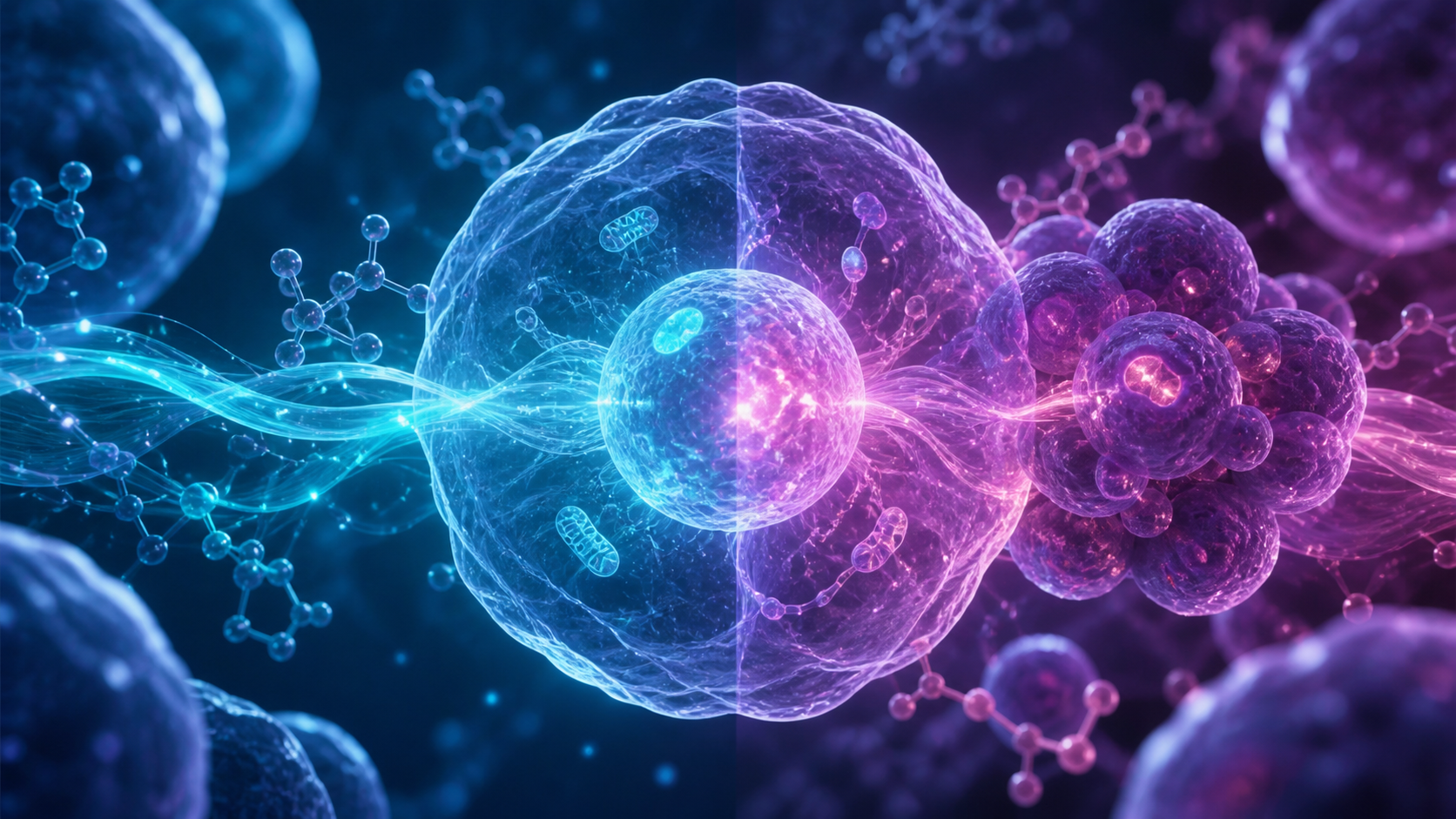
Few topics in NRF2 biology are as important — or as nuanced — as its relationship with cancer. For breast health in particular, it is essential to understand that NRF2 is a genuine “double-edged sword.” This article explains that nuance carefully. It is educational only and not medical advice.
The Protective Side
In healthy cells, NRF2 is protective. By neutralizing reactive oxygen species and boosting detoxification, robust NRF2 activity helps prevent the DNA damage that can initiate cancer in the first place. This is the basis for interest in NRF2-supportive diets for general prevention.
The Other Edge of the Sword
Once a tumor is established, the picture can reverse. Cancer cells can hijack NRF2 to protect themselves — using its antioxidant and detox machinery to survive, grow, and resist chemotherapy and radiation. This phenomenon, sometimes called the “dark side” of NRF2, is covered in depth in the dark side of NRF2 in cancer and the dual role of NRF2 explained.
Why This Matters for Breast Health
The practical takeaway is about context. NRF2-supportive foods and lifestyle habits are part of a healthy, potentially cancer-protective lifestyle for most people. But for someone with an active or prior breast cancer diagnosis, deliberately taking high-dose NRF2-activating supplements is a different matter entirely — one that could theoretically interfere with treatment and must be decided with an oncologist.
A Responsible, Food-First Perspective
For general breast health, a whole-food diet rich in cruciferous vegetables like broccoli sprouts and kale, along with flaxseeds and green tea, fits within widely recommended dietary patterns. This is very different from concentrated supplements, which deliver far higher doses and require medical oversight in the context of cancer.
The Bottom Line
NRF2 is protective in prevention but can aid established tumors — timing and context are everything. Anyone with a personal or family history of breast cancer should discuss supplement decisions with their medical team. See the women’s-health hub for the broader picture.
This article is for educational purposes only and is not medical advice, diagnosis, or treatment. Women’s health needs are highly individual. Always consult a qualified healthcare provider — such as your doctor or OB-GYN — before starting any supplement or making changes to your health routine, particularly if you are pregnant, trying to conceive, breastfeeding, taking medication, or have a personal or family history of cancer.
Frequently Asked Questions
Is NRF2 good or bad for cancer?
Both, depending on context. In healthy cells, NRF2 is protective and helps prevent the DNA damage that can start cancer. But once a tumor is established, cancer cells can hijack NRF2 to protect themselves and resist treatment. This is why it is called a “double-edged sword.”
Should women with breast cancer avoid NRF2 supplements?
Anyone with an active or prior breast cancer diagnosis should not take high-dose NRF2-activating supplements without consulting their oncologist. Because tumors can exploit NRF2 to resist chemotherapy and radiation, these decisions require individualized medical guidance.
Are NRF2-rich foods safe for breast health?
For general health, whole foods that support NRF2 — such as cruciferous vegetables, flaxseeds, and green tea — fit within widely recommended, potentially protective dietary patterns. This is different from concentrated supplements. If you have a cancer history, discuss even dietary questions with your care team.
Does the double-edged sword apply to prevention too?
For prevention in healthy tissue, NRF2 activity is generally considered protective. The concern arises mainly with established tumors and with high-dose supplementation during cancer treatment. Context, dose, and timing all matter — which is why medical guidance is essential for anyone with cancer risk factors.