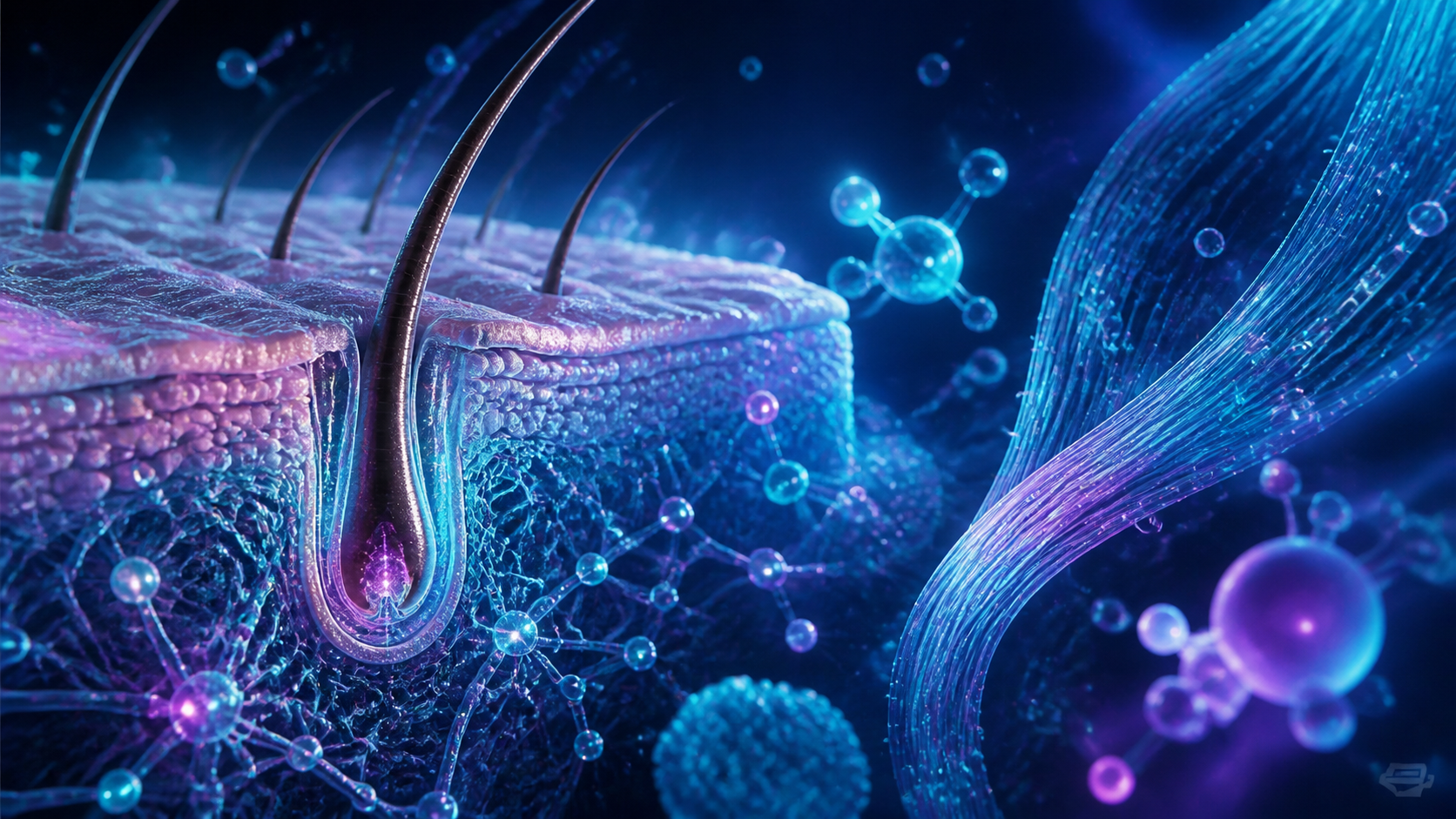
Skin and hair are among the first places women notice the effects of hormonal change and oxidative stress. From cyclical breakouts to menopausal dryness and thinning hair, the NRF2 pathway offers a unifying way to understand — and support — a resilient appearance.
Oxidative Stress and Visible Aging
Much of what we call “skin aging” is driven by oxidative damage from UV light, pollution, and internal stress. This damages collagen and elastin, leading to wrinkles and loss of firmness. NRF2 activates the skin’s own antioxidant defenses, helping protect these structural proteins.
The Hormonal Connection
Estrogen supports skin thickness, collagen, and hydration. As estrogen declines in menopause, skin can become thinner and drier, and hair may thin. The parallel rise in oxidative stress compounds these changes — which is why supporting NRF2 becomes especially relevant in midlife.
Skin, Hair, and the NRF2 Toolkit
For a deep dive on skin specifically, see our dedicated complete guide to NRF2 for skin. In brief, both internal nutrition and topical NRF2 activators (like sulforaphane) are being studied for protecting skin from oxidative and UV damage.
Foods for Skin and Hair
Beauty starts on the plate: omega-3-rich salmon for skin barrier and scalp health, avocado for healthy fats and vitamin E, pomegranate and blueberries for polyphenols, and broccoli sprouts for sulforaphane. Protecting skin from excess sun remains essential.
This article is for educational purposes only and is not medical advice, diagnosis, or treatment. Women’s health needs are highly individual. Always consult a qualified healthcare provider — such as your doctor or OB-GYN — before starting any supplement or making changes to your health routine, particularly if you are pregnant, trying to conceive, breastfeeding, taking medication, or have a personal or family history of cancer.
Frequently Asked Questions
How does NRF2 protect skin?
NRF2 activates the skin’s own antioxidant and detoxification genes, helping defend collagen and elastin against oxidative damage from UV light, pollution, and internal stress. This supports firmness, elasticity, and a more resilient complexion.
Why does skin change during menopause?
Estrogen supports skin thickness, collagen production, and hydration. As estrogen declines during menopause, skin often becomes thinner and drier while oxidative stress rises — a combination that accelerates visible aging and can contribute to hair thinning.
Can NRF2-activating foods improve hair health?
A nutrient-rich diet that supports NRF2 — including omega-3 fats, antioxidants, and adequate protein — supports overall scalp and hair health. While no food is a cure for hair thinning, good nutrition provides the building blocks and antioxidant protection hair follicles need.
Are topical NRF2 products effective?
Topical NRF2 activators such as sulforaphane are being studied for protecting skin against UV and oxidative damage, with promising early results. They are best viewed as one part of a broader routine that includes sun protection and good nutrition. See our complete guide to NRF2 for skin for details.