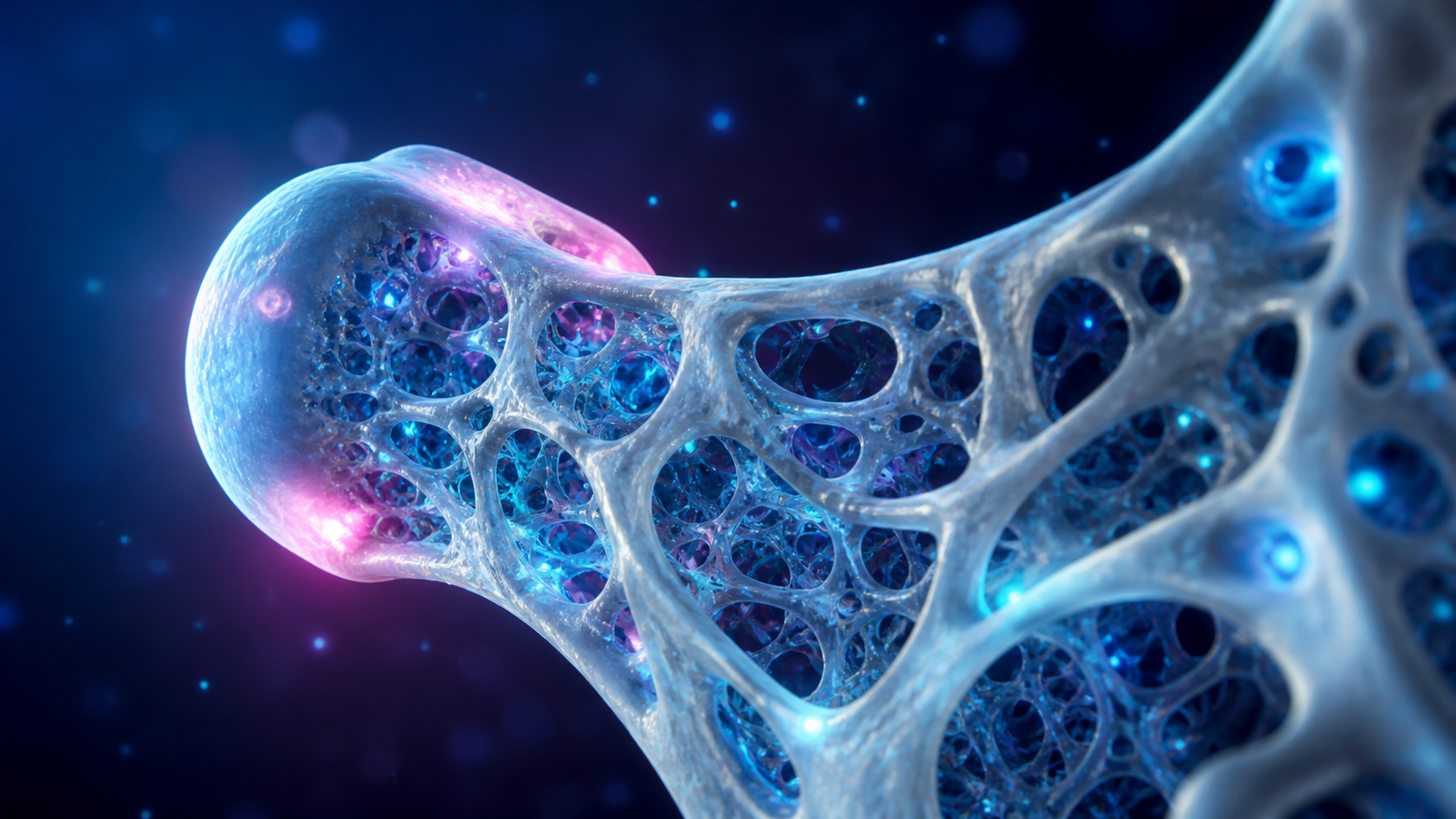
Osteoporosis affects women disproportionately, especially after menopause. While calcium and vitamin D get most of the attention, a quieter driver of bone loss is oxidative stress — and here the NRF2 pathway plays a protective role.
Bone Is Living Tissue
Bone is constantly remodeled by two cell types: osteoblasts (which build bone) and osteoclasts (which break it down). A healthy balance keeps bones strong. Oxidative stress tips this balance toward breakdown — it promotes osteoclast activity while impairing bone-building osteoblasts.
Why Women Are Especially Vulnerable After Menopause
Estrogen helps protect bone and supports antioxidant defenses. When estrogen falls during menopause, oxidative stress rises just as its protective effect on bone fades — a double blow that accelerates bone loss in the years around menopause.
How NRF2 Protects Bone
NRF2 activation boosts antioxidant defenses that shield bone-building cells and help restrain excessive bone breakdown. Research on plant compounds that activate NRF2 shows encouraging effects on bone markers. Our article on how quercetin boosts bone health via NRF2 details one well-studied example.
Foods and Nutrients for Bone-Supportive NRF2
Alongside adequate calcium, vitamin D, and protein, NRF2-supportive foods include quercetin-rich onions and red grapes, leafy cruciferous greens (also rich in vitamin K), and walnuts. Weight-bearing exercise remains one of the most powerful bone-building tools.
Related Reading
Bone health connects closely to the menopausal transition and to the biology of aging. Ask your doctor about bone-density screening if you are peri- or post-menopausal.
This article is for educational purposes only and is not medical advice, diagnosis, or treatment. Women’s health needs are highly individual. Always consult a qualified healthcare provider — such as your doctor or OB-GYN — before starting any supplement or making changes to your health routine, particularly if you are pregnant, trying to conceive, breastfeeding, taking medication, or have a personal or family history of cancer.
Frequently Asked Questions
How does oxidative stress cause bone loss?
Oxidative stress promotes the activity of osteoclasts (cells that break down bone) while impairing osteoblasts (cells that build bone). This tips bone remodeling toward net loss, contributing to the reduced bone density seen in osteoporosis.
Why does bone loss speed up after menopause?
Estrogen protects bone and supports antioxidant defenses. When estrogen declines at menopause, oxidative stress rises and bone loses one of its key protectors at the same time — accelerating bone loss in the years surrounding menopause.
Can NRF2-activating compounds protect bone?
Preclinical and some human research suggests NRF2-activating plant compounds, such as quercetin and sulforaphane, may support bone health by reducing oxidative stress and favoring bone formation. They complement — but do not replace — calcium, vitamin D, protein, and weight-bearing exercise.
What is the best exercise for bone health?
Weight-bearing and resistance exercises — such as walking, jogging, dancing, and strength training — stimulate bone formation and are among the most effective strategies for maintaining bone density. Exercise also naturally supports NRF2 activity.