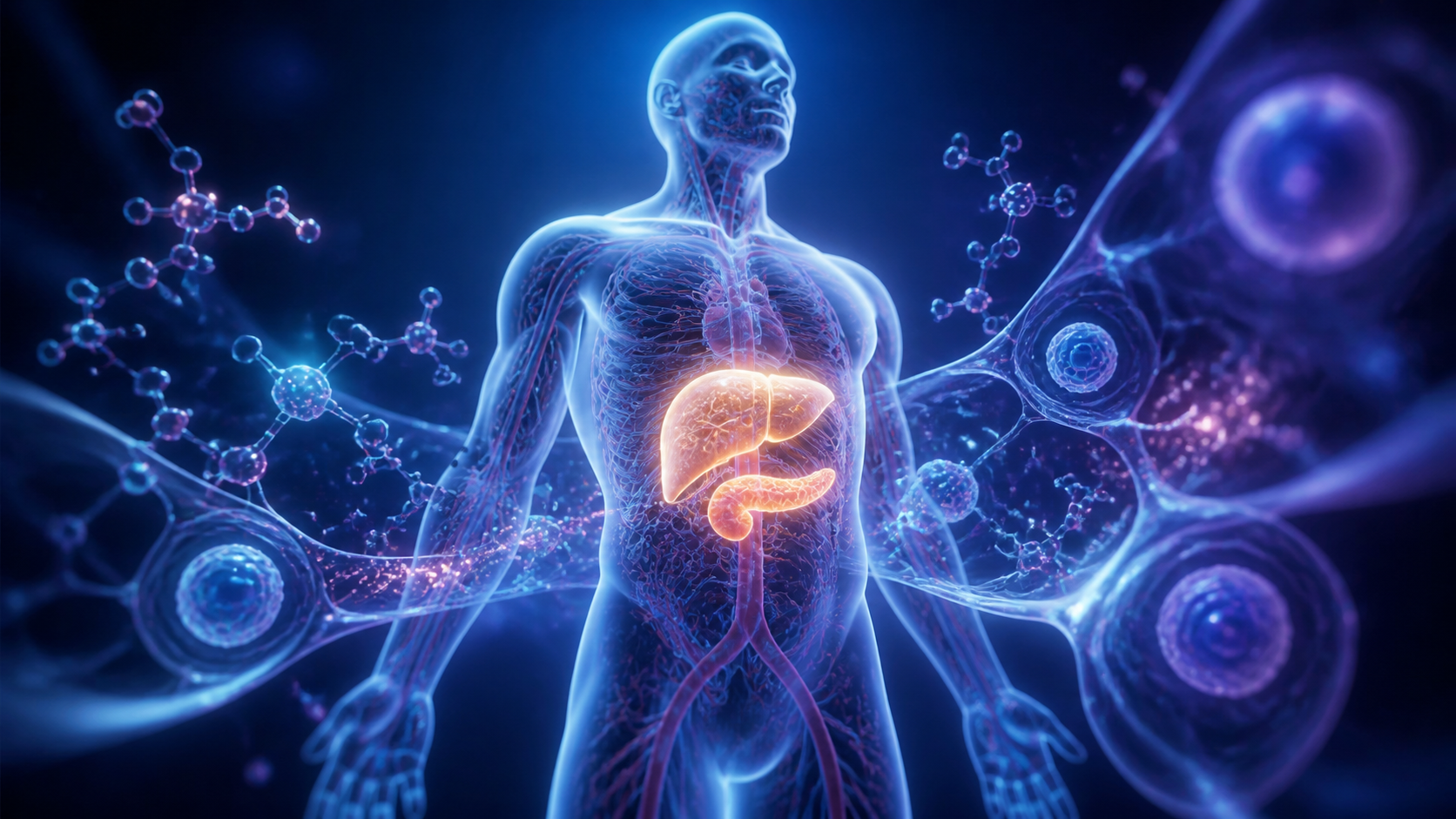
Metabolic health — how well your body handles blood sugar, fats, and energy — has become one of the defining health challenges of our era. Rates of insulin resistance, type 2 diabetes, and fatty liver disease have climbed steadily for decades. Underneath many of these conditions sits a common thread: chronic oxidative stress and low-grade inflammation. That is exactly the territory governed by NRF2, the cell’s master switch for antioxidant defense.
This guide is the hub of our metabolic health series. It explains how NRF2 fits into the metabolic picture and links to in-depth articles on each topic.
What Is NRF2?
NRF2 (nuclear factor erythroid 2–related factor 2) is a transcription factor — a protein that switches genes on. Under normal conditions it is held in check by a partner protein called KEAP1. When cells sense oxidative or chemical stress, NRF2 is released, moves into the nucleus, and activates more than 200 protective genes, including those for glutathione production, detoxification enzymes, and antioxidant proteins. For a full primer, see our NRF2 activation guide.
Why Oxidative Stress Matters for Metabolism
Every time your cells turn glucose and fat into energy, they generate reactive oxygen species (ROS) as a by-product. In small amounts, ROS are useful signals. But chronic overnutrition, excess visceral fat, inactivity, and poor sleep push ROS production beyond what the cell can neutralize. The result is damage to insulin-signaling proteins, stressed pancreatic beta cells, fat accumulation in the liver, and inflamed blood vessels.
Research in cell and animal models consistently shows that NRF2 activity helps buffer this stress. Human evidence is still developing, and it is important to be honest that most findings come from laboratory and animal work rather than large clinical trials.
The Metabolic Series at a Glance
- NRF2 and type 2 diabetes — beta-cell protection and diabetic complications.
- NRF2 and insulin resistance — how oxidative stress blunts insulin signaling.
- NRF2, obesity, and weight management — the surprisingly complex relationship.
- NRF2 and fatty liver disease (NAFLD/MASLD) — the liver’s defense system.
- NRF2 and metabolic syndrome — one pathway, five risk factors.
- NRF2 foods for blood sugar control — building a supportive plate.
- NRF2, cholesterol, and cardiometabolic health — protecting blood vessels.
- NRF2, intermittent fasting, and meal timing — hormesis in practice.
The Double-Edged Sword
NRF2 is not a “more is always better” pathway. Some animal studies suggest that permanently maximized NRF2 activity can alter fat storage, and in established cancers NRF2 can be hijacked by tumor cells (see NRF2’s dark side). The goal is a responsive pathway — one that switches on when needed — which is what lifestyle-based activation tends to produce.
Everyday Ways to Support NRF2
- Cruciferous vegetables, especially broccoli sprouts and kale, rich in sulforaphane precursors.
- Polyphenol-rich foods such as green tea, blueberries, turmeric, and cinnamon.
- Regular exercise, one of the most reliable natural NRF2 activators — see exercise and NRF2.
- Sleep, stress management, and a healthy gut — covered in the NRF2–gut axis.
Our earlier deep-dives on NRF2, weight loss, and metabolic syndrome and the NRF2 oxidative stress response in diabetes remain excellent companion reads.
Frequently Asked Questions
What does NRF2 have to do with blood sugar?
High blood sugar increases oxidative stress, which damages insulin-producing beta cells and insulin-signaling pathways. NRF2 activates antioxidant and detoxification genes that help buffer this stress. Most evidence comes from lab and animal studies, so NRF2 support should complement — not replace — standard medical care.
Can activating NRF2 reverse diabetes?
No. There is no evidence that NRF2 activation alone reverses diabetes. Diet, exercise, weight management, and prescribed medications remain the foundation of treatment. NRF2-supportive habits may help reduce the oxidative stress that contributes to metabolic decline.
What is the best way to activate NRF2 for metabolic health?
Lifestyle measures are the best-supported approach: regular exercise, a diet rich in cruciferous vegetables and polyphenols, adequate sleep, and maintaining a healthy weight. These produce a natural, responsive NRF2 activation rather than a constant maximal signal.
Are NRF2 supplements safe for people with diabetes?
Some NRF2-related supplements can affect blood sugar or interact with medications. Anyone with diabetes should speak with their physician before starting a supplement. See our NRF2 supplements guide for more on quality and safety.
Disclaimer: This article is for educational purposes only and is not medical advice. It is not intended to diagnose, treat, cure, or prevent any disease. If you have diabetes, liver disease, or another metabolic condition — or take medications such as insulin, metformin, or statins — talk with your physician before changing your diet, fasting, or starting supplements.